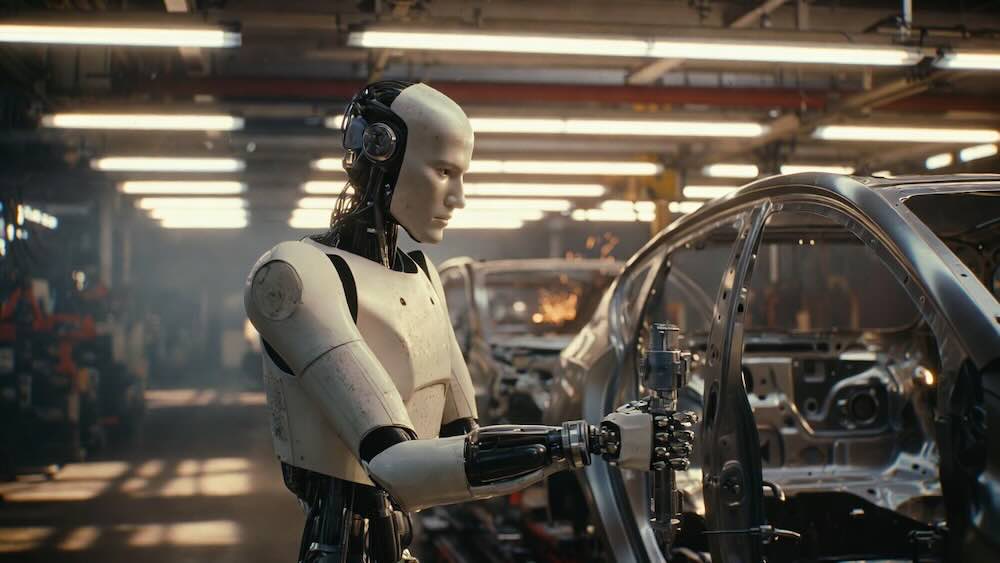
What happened: UBTech signed a cooperation deal with Siemens Digital Industries Software to industrialize its humanoid robot production—specifically, to chase an annual capacity of 10,000 units in 2026. The prototype era is over; the spreadsheet era has entered the chat.
Why it matters: Building humanoids at volume is less “cool demo” and more “ruthless manufacturing discipline.” Siemens’ stack (design, simulation, process planning, manufacturing management) is the kind of boring-but-decisive infrastructure that turns one-off robots into a repeatable product.
Wider context: The competitive edge is shifting from who can walk nicely on stage to who can ship reliably in factories and logistics without eating warranty costs for breakfast. Analysts are increasingly treating production efficiency and cost control as the next battleground.
Background: UBTech says orders are surging and has already delivered its Walker S2 industrial humanoid in 2025, while reporting 2025 orders exceeding 1.4 billion yuan with use cases in manufacturing and logistics. The deal signals a push to scale quality control, supply chains, and lifecycle management.
UBTech’s goal to mass-produce 10,000 humanoid robots by 2026 gets Siemens backing — Interesting Engineering
Droid Brief Take: Every humanoid startup wants to be “the iPhone moment,” but the real boss fight is manufacturing: simulation, digital twins, and grim supply-chain reality. Partnering with Siemens is UBTech admitting the quiet truth—robots don’t scale on vibes.
Key Takeaways:
- Production, Not Theater: The partnership is explicitly about moving from prototypes to high-volume manufacturing, with Siemens providing tools that connect design and factory execution—because “it walked once” is not a manufacturing strategy.
- Digital Backbone: Siemens’ portfolio is positioned to enable end-to-end digitization across the robot lifecycle (design, simulation, process planning, manufacturing management), which is particularly critical given humanoids’ complexity versus conventional industrial robots.
- Scaling Claims Get Real: UBTech targets 10,000 units annual capacity in 2026 and says orders are surging; the article notes success hinges on cost control, supply chains, quality control, and reliability—unsexy engineering that decides who survives.