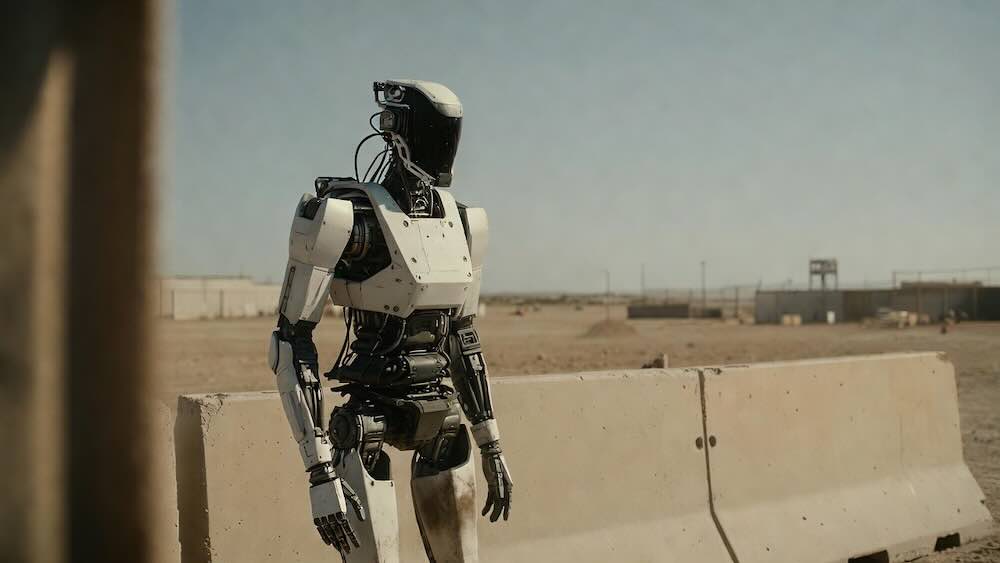
What happened: NextGenDefense reports that two “Phantom MK-1” humanoid robots have been sent to Kyiv to support Ukrainian forces with reconnaissance, positioning the platform as a purpose-built defense humanoid entering an active conflict zone.
Why it matters: If accurate, this is the uncomfortable next step after drone warfare: human-shaped systems designed to use human weapons, marketed for frontline utility while promising “human authorization” before engagement. The ethics boilerplate is doing overtime.
Wider context: The article frames the MK-1 as a heavy-payload, moderate-speed platform (40kg payload, ~1 m/s) with 19 degrees of freedom, and claims US military funding plus evaluations with the Marine Corps and interest in border scenarios.
A New Kind of Warfighter Enters the Battlefield: Humanoid Robot Arrives in Ukraine — NextGenDefense
Droid Brief Take: We’re watching “humanoid robots” split into two futures: helpful warehouse labour and very expensive moral hazard. The second one arrives with a press release, a payload spec, and a promise that a human will definitely be in the loop. Sure.
Key Takeaways:
- Claimed Deployment: The piece says two Phantom MK-1 units were sent to Kyiv for reconnaissance support, signalling an intent to test humanoid platforms in real operational conditions rather than controlled demos.
- Weapons-Compatible Payload: It claims an 88lb (40kg) mission payload and compatibility with firearms “used by human troops,” which is the sort of specification that turns a robotics story into a policy problem instantly.
- Hardware Profile: The MK-1 is described as 1.8m tall with 19 degrees of freedom and speeds up to 1 m/s — not superhero fast, but potentially useful if reliability beats theatrics.
- Human-in-the-Loop Messaging: The developer reportedly cites Pentagon protocols requiring human authorization before any engagement, implicitly acknowledging the political and legal blast radius of autonomous force in a human-shaped chassis.