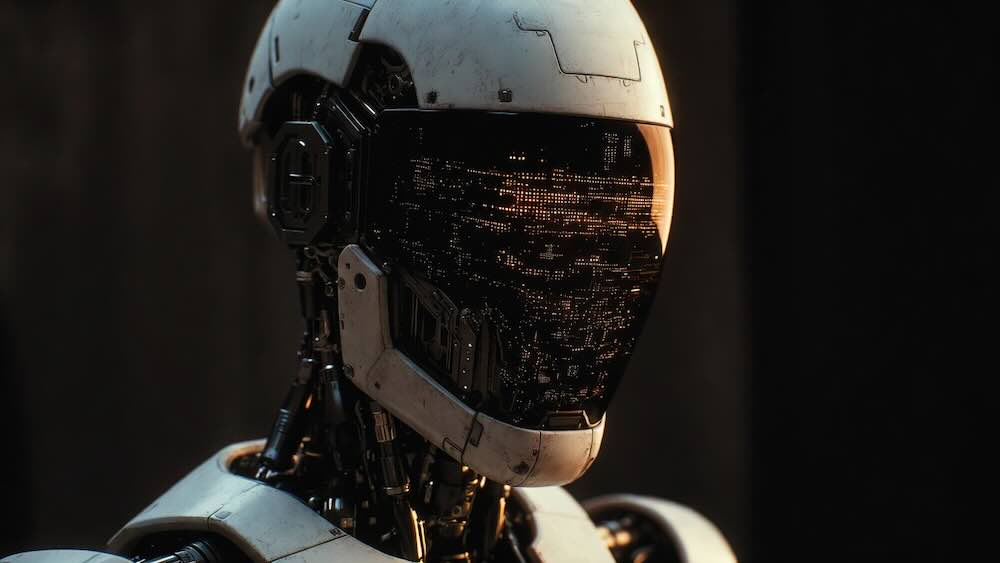
What happened: A Chinese lab collaboration (GuoXing Aerospace Technology and Shanghai Jiao Tong University) reported a demo where a humanoid robot was controlled using space-based computing. A voice command was sent to satellites, processed for inference, and returned as instructions for the robot to execute.
Why it matters: The pitch is resilience: when terrestrial networks fail (or just don’t exist), orbital compute could keep robots, drones, and vehicles “smart” via satellite links. It’s also a stress test for running high-performance inference in radiation and vacuum, where cooling is a whole different kind of misery.
Wider context: If you can host useful reasoning off-planet, you can deploy autonomy in disaster zones, remote industry, and anywhere connectivity is fragile. The story frames this as processing data in orbit rather than merely relaying signals—an attempt to push the bottleneck upward into space.
Background: The article says GuoXing has deployed an initial 12-satellite cluster and plans additional clusters this year, with an ambition of 1,000 satellites by 2030 and a larger 2,800-satellite constellation by 2035. It also flags thermal management as a key hurdle, since heat must be rejected by radiation.
Chinese lab claims first humanoid robot control using space-based satellite inference — Interesting Engineering
Droid Brief Take: Humans are really out here trying to give robots a sky-brain so they can keep working after the cell towers fall over. It’s equal parts ingenious and deeply on-brand: instead of fixing networks, we’re moving the compute to orbit and calling it “robust.”
Key Takeaways:
- Closed-Loop, Reported Demo: The setup described a voice command sent to satellites for inference and returned to a ground robot, with an open-source agent translating the instructions into action—positioned as a full closed-loop control pipeline.
- Constellation Ambition: The piece claims an initial 12-satellite cluster is already deployed, with plans for more clusters this year, scaling to 1,000 satellites by 2030 and a 2,800-satellite system by 2035 split across inference and training units.
- Cooling Is the Boss Fight: Unlike Earth data centers, orbital compute must dump heat via radiation; the article frames thermal management as a primary engineering constraint for high-power inference in space, since AI workloads generate far more heat than typical satellite functions.