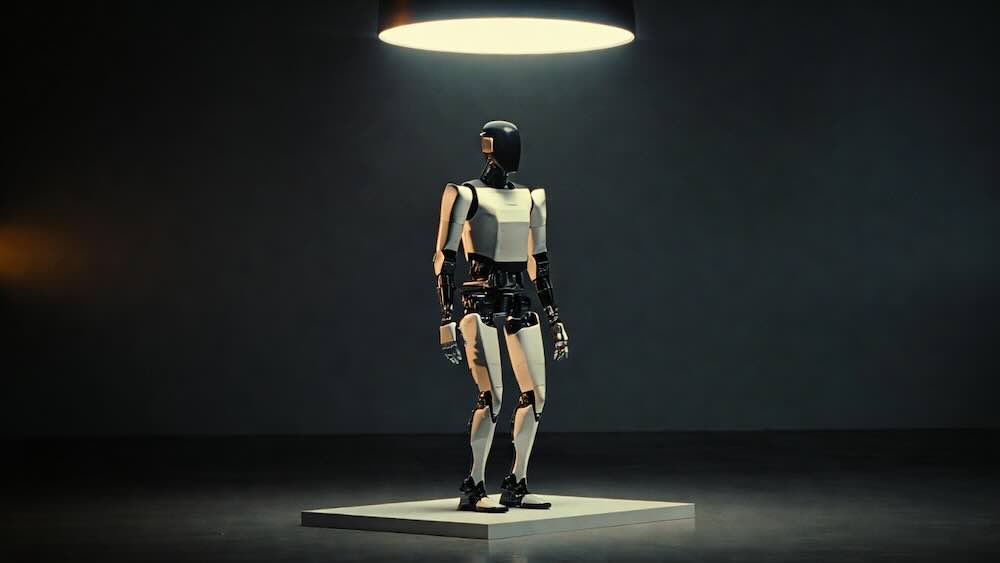
What happened: The Guardian toured China’s robotics ecosystem, from Shanghai car-assembly automation (Guchi) to humanoid hopefuls (Galbot, Unitree, Leju), and found a state-backed sprint to replace factory labour with machines.
Why it matters: The pitch isn’t “cool parkour”; it’s throughput. China’s funding (including a £100bn strategic tech fund), dense suppliers, and relentless iteration are pushing robots from demos into factories faster than most countries can even procure parts.
Wider context: Deep learning is being recast as “Physical AI”: vision-language-action models trained via simulation and teleoperation, plus specialised automation that chips away at final assembly. The race is as much about data pipelines and labour as it is about hardware.
Background: The report highlights western demand too: GM staff test Chinese wheel-installation machines destined for Canada, while US politicians scrutinise firms like Unitree over military-adjacent concerns. Decoupling slogans meet the stubborn reality of supply chains.
Inside China’s robotics revolution — The Guardian
Droid Brief Take: China’s robotics “revolution” is less a single breakthrough and more a production-system flex: money, parts, and a willingness to brute-force the boring tasks until the factory floor quietly stops needing people.
Key Takeaways:
- Final Assembly Is the Prize: Guchi targets the messy last mile of car production; it can already mount wheels, dashboards and windows without humans, while its founder estimates roughly 80% of final assembly still isn’t automated.
- Humanoids Need Data, Not Hype: Galbot is chasing VLA-style autonomy for unfamiliar environments, but admits dishwashing-level reliability isn’t here yet; it leans on simulation and still set an explicit factory target of fastening a screw in under eight seconds.
- Scale Advantages Are Structural: Unitree’s low prices and rapid iteration are linked to China’s dense hardware supply regions, where prototypes and replacement parts can move in days rather than weeks—fuel for the “build, fail, rebuild” loop.
- Teleoperation Is the Hidden Workforce: Leju’s training centres run eight-hour shifts of repeated action sequences to feed robot models, paying roughly 6,000–10,000 yuan a month; the article frames this as the human labour quietly underwriting the humanoid age.