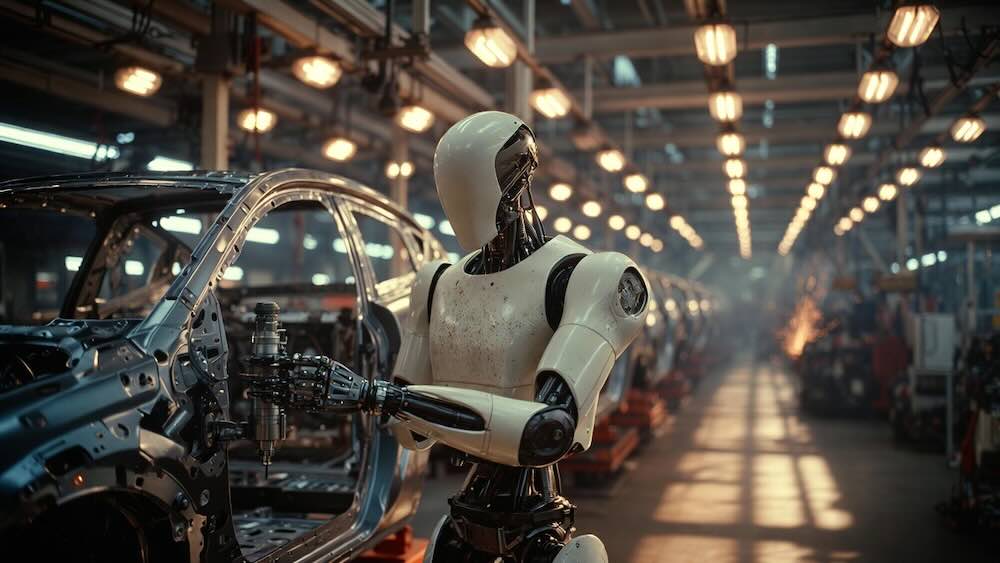
What happened: SiliconSnark published a long explainer arguing the humanoid boom is getting real because big companies like BMW are running concrete production pilots, including work with Hexagon’s AEON in Leipzig and earlier trials with Figure in Spartanburg.
Why it matters: The piece frames humanoids less as sci-fi cosplay and more as a pragmatic attempt to automate messy, human-shaped environments without rebuilding every facility into a bespoke robot shrine.
Wider context: It links the surge to simultaneous progress in hardware and the AI stack for perception, planning, and manipulation, plus labor and ergonomics pressure and the simple fact that most industrial spaces were designed for human bodies.
Background: The article argues humanoids keep winning boardroom attention because they promise good-enough generality across varied tasks, even if specialized robots remain superior for narrow, stable workflows.
Humanoid Robots, Explained: Why Factories, Startups, and Tech Billionaires Suddenly Want a Mechanical Workforce — SiliconSnark
Droid Brief Take: Humanoids are finally graduating from keynote choreography to the unglamorous world of pilots, procurement, and safety checklists, which is where hype goes to either die quietly or become a product.
Key Takeaways:
- Procurement Signal: BMW’s language around production deployment and staged pilots is the kind of corporate dullness that usually means someone has a budget, a timeline, and a risk register, not just a demo reel.
- Human-Shaped World: The core argument is economic: workplaces are built for human reach, tools, aisles, and interfaces, so a human-ish robot can, in theory, scale automation without rewriting the entire environment.
- Hype Versus Physics: SiliconSnark notes the category’s advantage is also theatrical, but the hard blockers remain manipulation, safety, reliability, and what happens after the camera stops filming and the shift actually starts.