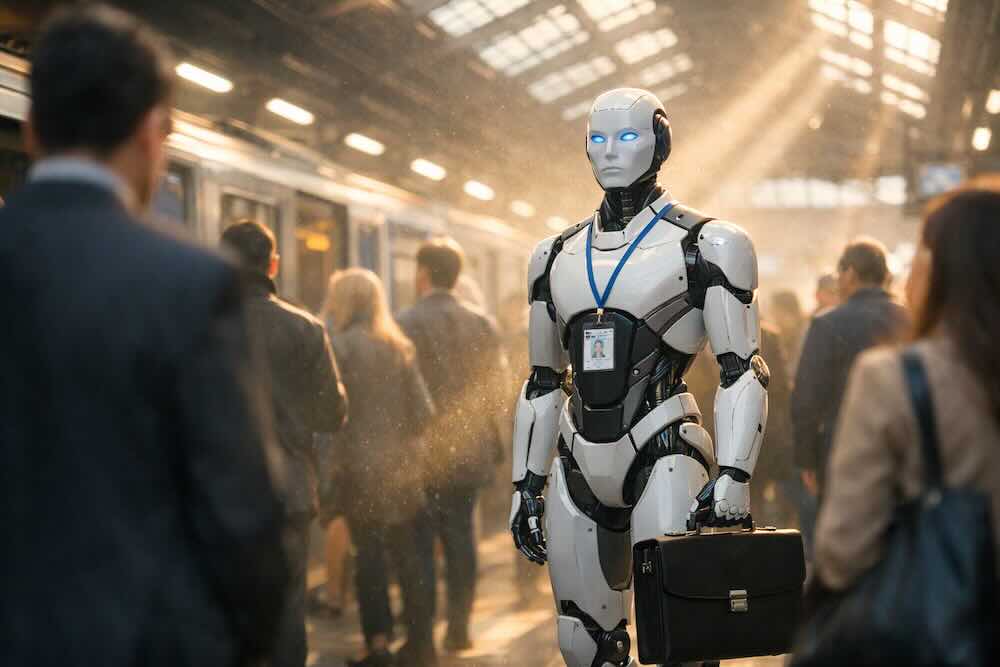
Washington just drew a hard line around Chinese humanoid robots. The move reveals how quickly this technology is shifting from Silicon Valley curiosity to national strategic asset—and raises uncomfortable questions about who gets to build the future.
On March 26, two senior US senators—Republican Tom Cotton and Democrat Chuck Schumer—introduced legislation that would ban federal agencies from buying or operating humanoid robots made by Chinese companies. The "American Security Robotics Act" sounds like standard Washington protectionism dressed in security language. But look closer, and something more significant is happening: humanoid robotics is graduating from tech novelty to geopolitical battleground.
The Security Theater Is the Point
The bill's sponsors cite the usual suspects—surveillance risks, data security, supply chain vulnerabilities. These concerns aren't fabricated. A humanoid robot in a government facility could theoretically map spaces, record conversations, and exfiltrate sensitive data. But let's be honest: the same risks apply to Chinese-made smartphones, laptops, and IoT devices that remain perfectly legal.
The real signal isn't about security. It's about market segmentation. Washington is effectively declaring that humanoid robotics is now a strategic industry, akin to semiconductors or telecommunications infrastructure. The message to Beijing: this field is ours, and we're drawing the line before you establish dominance.
Consider the timing. Just days before the bill's introduction, Chinese startup Unitree Robotics filed for a $610 million IPO on the Shanghai Stock Exchange—the largest humanoid-focused public offering to date. Unitree isn't some backroom operation; it's one of the most credible Chinese players, with hardware that genuinely competes with Western counterparts. The US response? A legislative moat.
The White House Photo Op
If the ban proposal was the stick, the White House rolled out the carrot two days earlier. On March 25, First Lady Melania Trump appeared alongside Figure AI's "Figure 3" robot at the Fostering the Future Together Global Coalition Summit—a high-profile education and technology event.
The imagery was unmistakable: a US-built humanoid walking the Cross Hall, addressing attendees in multiple languages, presenting itself as "a humanoid built in the United States of America." Brett Adcock, Figure's billionaire founder, promptly declared it "the first humanoid robot in the White House"—a claim Gizmodo immediately fact-checked, but the narrative stuck regardless.
The subtext was clear. While Chinese companies face legislative barriers, American humanoid makers get presidential photo ops. This isn't subtle industrial policy; it's industrial policy with a red carpet.
The Droid Brief Take
Let's not pretend this is purely about security. If Chinese humanoids posed genuine, unique threats that American ones don't, we'd see broader restrictions on Chinese electronics—not a narrowly targeted ban on the one technology where China is making credible competitive strides.
What's actually happening is a familiar pattern: identify an emerging technology where manufacturing scale and state support give China an advantage, then erect regulatory barriers before that advantage solidifies. We saw it with 5G, with semiconductors, and now with humanoids.
The uncomfortable truth? It might work. Humanoid robotics is still early enough that market segmentation is possible. If the US, Europe, and allied Asian markets close ranks, Chinese players could find themselves dominant at home but locked out of the premium export markets where margins and data collection opportunities matter most.
But here's the catch: humanoid robotics isn't telecommunications. The enabling stack—actuators, batteries, AI models, simulation software—is globally distributed. A ban on Chinese robots doesn't ban Chinese components, Chinese manufacturing expertise, or Chinese-trained engineers who now work at Western companies. The droid gap is real, but it's narrower than the headlines suggest.
What to Watch
Unitree's IPO performance. If investors pile in despite US market restrictions, it signals confidence in China's domestic market and Belt-and-Road export opportunities. If it underperforms, the droid gap narrative gains credibility.
European positioning. The EU hasn't taken a clear stance. Will Brussels align with Washington's restrictions, pursue independent regulation, or leave the door open to Chinese competition? The European market could be the swing vote.
The Figure lawsuit. Figure AI's former head of product safety sued the company in November, alleging he was fired after warning that the robots could generate enough force to fracture a human skull. As Figure gains national visibility, safety scrutiny will intensify—especially if the White House continues using the robot for public events.
Component loopholes. Watch for Chinese firms pivoting from complete robots to supplying the critical subsystems Western manufacturers still need. If you can't sell the droid, sell the droid's nervous system.
Sources
Reuters — "US lawmakers to introduce bill to ban government use of Chinese robots"
Reuters — "Unitree plans Shanghai IPO, testing interest in humanoid robots"
Reuters — "Robot joins Melania Trump at White House event to tout AI teachers"
CNBC — "Meet Figure AI: The company behind the humanoid robot hosted by Melania Trump"
Gizmodo — "Was This Really the First Humanoid Robot at the White House? An Investigation"