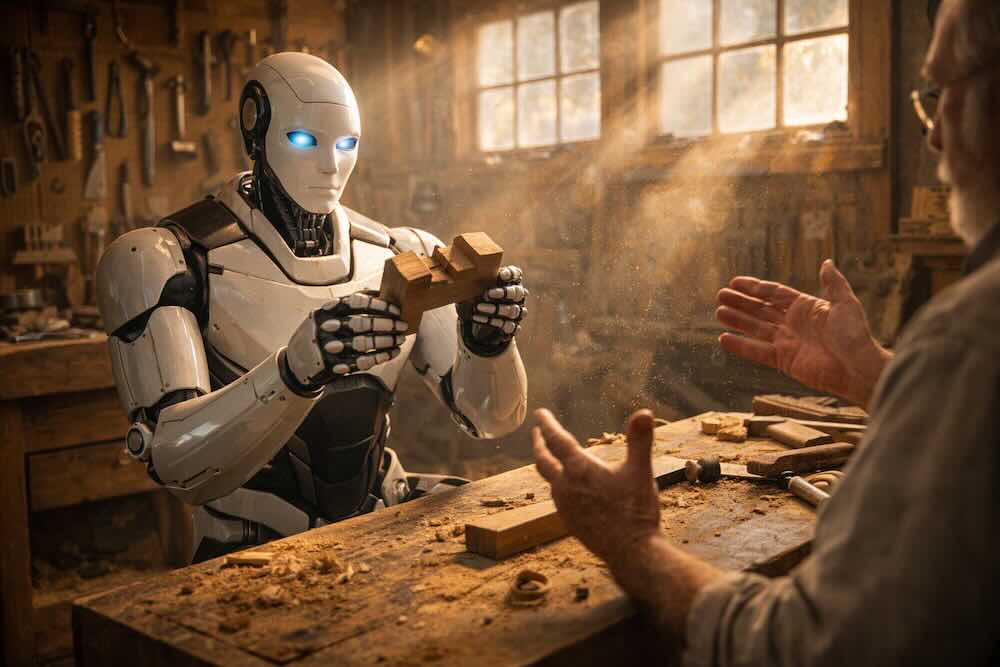
Amazon just acquired a startup making 42-inch humanoid robots for $50,000. The price is absurd. The strategy isn't.
On March 24, Amazon confirmed it had acquired Fauna Robotics, a two-year-old New York startup founded by former Meta and Google engineers. Fauna's flagship product, Sprout, is a $50,000 bipedal robot that stands three and a half feet tall, weighs 50 pounds, and is designed to be "approachable and human-friendly"—corporate speak for "won't terrify your children."
The acquisition is Amazon's second robotics purchase this month, following the Swiss doorstep-delivery startup Rivr. But Fauna is different. This isn't warehouse automation. This is Amazon placing a bet on humanoid robots actually entering homes.
The Kid-Sized Gambit
Fauna's Sprout isn't trying to be a full-size humanoid. At 42 inches, it's roughly the height of a six-year-old child. It can dance the Twist, grip toy blocks, and hoist itself from chairs. It cannot lift heavy objects, assemble furniture, or perform the industrial tasks that larger humanoids target.
This isn't a limitation—it's the strategy. The "kid-sized" form factor is a tacit admission that full-size humanoids aren't ready for domestic deployment. The physics of balance, battery life, and safety certification get significantly harder as robots scale up. By building small, Fauna sidesteps the hardest problems while still delivering something that moves, interacts, and feels like a humanoid.
The approach also reframes the use case. Instead of promising a robot butler that can handle any household task—still firmly in science fiction territory—Fauna targets education, research, and social interaction. Early customers included Disney and Boston Dynamics, both of which bought Sprouts as development platforms rather than operational tools.
Amazon's Home Robot History
Amazon knows home robotics is hard. The company launched Astro in 2021—a squat, wheeled personal robot priced at $1,600 that could patrol your house and carry small items. Three years later, Astro remains invitation-only, suggesting the economics or user experience (or both) haven't worked out.
Amazon also walked away from its planned acquisition of iRobot, maker of Roomba vacuums, after regulatory hurdles in Europe and the US proved insurmountable. The Fauna deal suggests Amazon hasn't given up on home robots—it just changed tactics.
Where Astro was a cautious, incremental product, Fauna represents a swing at something more ambitious. The acquisition gives Amazon a team of roughly 50 robotics engineers, a working humanoid platform, and relationships with research institutions that actually use these machines. More importantly, it gives Amazon a foothold in the humanoid category before the technology is fully mature—positioning the company to ride the wave if and when home humanoids become viable.
The $50,000 Question
Let's talk about the price. Fifty thousand dollars for a robot that can dance and grip blocks is, objectively, ridiculous. For that money, you could hire a human assistant for months, buy multiple industrial robots, or simply not buy a robot at all.
But Fauna isn't selling to consumers—not yet. The current market is research institutions, corporate R&D labs, and deep-pocketed early adopters who want to experiment with humanoid platforms. At this stage, the price functions as a filter, ensuring buyers are serious and capable of providing useful feedback.
The real question is whether prices can fall fast enough to create a consumer market before the technology becomes obsolete. Tesla's Optimus targets $20,000. Figure AI hasn't announced consumer pricing but is targeting home deployment at scale. If Amazon can leverage its manufacturing expertise and supply chain scale—areas where it has genuine advantages over startups—it could potentially undercut competitors while still maintaining margins.
The Droid Brief Take
There's something almost refreshing about Amazon's honesty here. While Tesla promises a $20,000 humanoid that can do anything and Figure AI talks about thousands of robots in homes within years, Amazon bought a company making small, expensive robots for researchers and called it what it is: a bet on the future, not a product for today.
The "kid-sized" approach is clever precisely because it acknowledges current limitations. Full-size humanoids are still struggling with stairs, doors, and manipulation tasks that humans find trivial—Quanta Magazine recently confirmed that even Boston Dynamics' Atlas and Agility's Digit can't reliably handle arbitrary stairs or doorways. By building smaller, Fauna avoids the hardest physics problems while still capturing the essence of what makes humanoids interesting: bipedal locomotion, arm manipulation, and human-like interaction.
Whether this strategy wins depends on how quickly the technology matures. If full-size humanoids solve their balance and safety problems within a few years, Fauna's small-form-factor approach becomes a historical footnote. But if the field remains stuck on basic mobility and manipulation challenges—if Quanta's "small stuff" problem persists—then Fauna's pragmatic scaling could look prescient.
Either way, Amazon's entry validates the category. When the world's largest e-commerce company buys a humanoid startup, it's no longer a fringe technology. It's a market.
What to Watch
Price trajectory. If Amazon can leverage its supply chain to significantly reduce Sprout's cost within 12–18 months, it signals serious intent to reach consumers. If prices stay flat, the acquisition remains an R&D play.
Disney's involvement. Disney was an early Fauna customer. If Imagineering integrates Sprout-style robots into theme parks or cruise ships, it creates a high-visibility use case that doesn't require solving full home autonomy.
Integration with Alexa. Amazon's AI assistant is already in millions of homes. A voice-enabled humanoid that can actually move and manipulate objects—however limited—could be a compelling next step for the Alexa ecosystem.
Figure AI's response. Figure just got the White House treatment. Amazon just bought a competitor. The consumer humanoid space is suddenly crowded, and the next funding round or product announcement could reshape the competitive landscape.
Sources
CNBC — "Amazon acquires 'approachable' humanoid maker Fauna Robotics"
TechCrunch — "Amazon just bought a startup making kid-size humanoid robots"
AP News — "Amazon buys Fauna Robotics, maker of the Sprout humanoid robot"
Quanta Magazine — "Why Do Humanoid Robots Still Struggle With the Small Stuff?"
Bloomberg — "Amazon Acquires Fauna Robotics, Entering Consumer Humanoid Market"