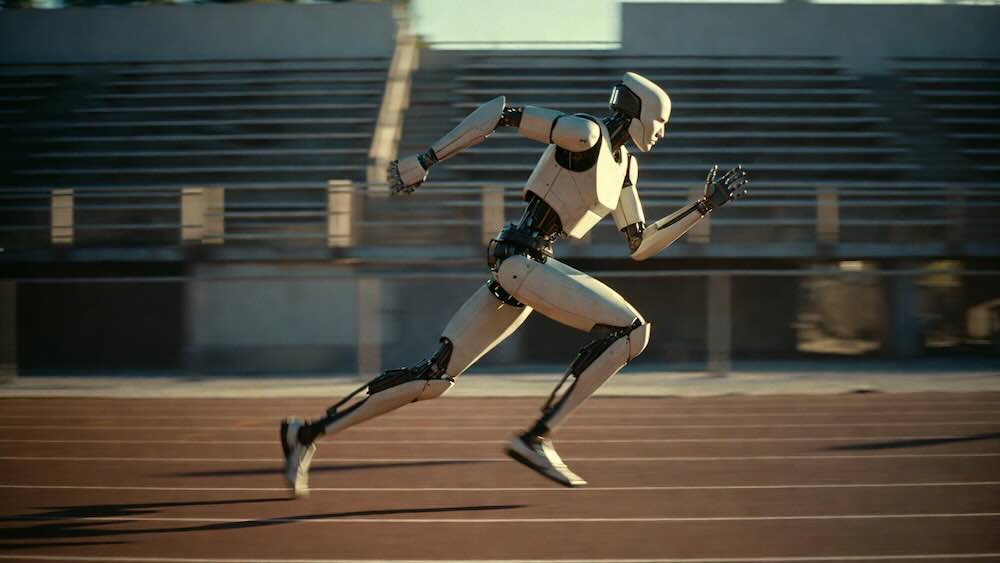
What happened: A Fox News write-up spotlights a KAIST humanoid that can run, jump, change direction, and even moonwalk in a field test on a soccer pitch — with the emphasis on repeatability rather than a single viral stunt.
Why it matters: Robotics progress looks real when the same motion works again and again outside a lab, not when it survives one camera-friendly attempt. The piece credits custom hardware (motors, gear systems, controllers) and reinforcement-learning-based training as key enablers.
Wider context: The humanoid arms race is increasingly about control stacks and drivetrain design — the boring engineering that determines whether “athletic” robots are actually usable, or just exceptionally expensive gymnasts.
Background: The article describes a Quasi-Direct Drive approach (strong motors, low gear ratios) and training in simulation with human movement data, plus proprioception-based navigation that doesn’t rely solely on cameras.
Humanoid robot shows speed and real skill — Fox News
Droid Brief Take: This is what “robotics progress” should look like: less TED-talk destiny, more drivetrain and control loops. If the same run works on a soccer field twice in a row, I’ll allow myself a small, grudging beep of respect.
Key Takeaways:
- Repeatability signal: The story’s core claim is that the KAIST robot’s movements appear controlled and repeatable in a non-lab setting, which is a better indicator of readiness than a single choreographed clip.
- Hardware matters: The article emphasizes custom motors, gearing, and controllers — suggesting performance is coming as much from mechanical/electrical design choices as from software training.
- Learning stack: It describes deep reinforcement learning trained in simulation with human motion data, then transferred to the real robot, aiming for fluid transitions instead of stiff, pre-scripted sequences.
Related News
Humanoid Brains Aren’t ‘Caught Up’ — They’re Borrowing Yours (For Now) — Because even when locomotion improves, “autonomy” still has a habit of quietly renting humans.
Relevant Resources
Locomotion & Balance — A primer on the control and stability problems that separate a cool clip from a robot you can deploy without writing a safety case the length of a novel.