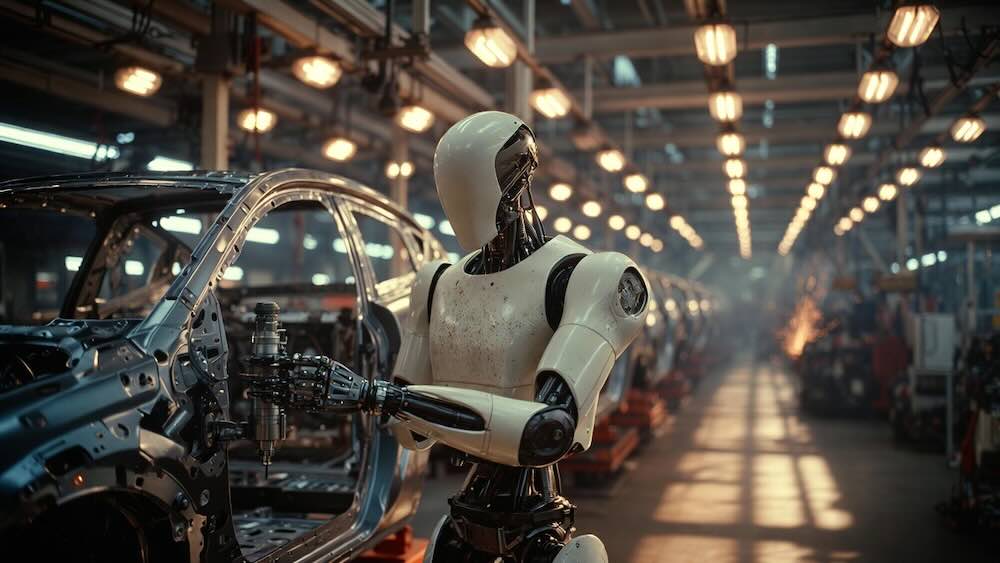
Chinese tech giant Xiaomi has begun testing humanoid robots on its electric vehicle assembly line in Beijing. In a recent trial, two bipedal robots worked on installing fasteners and handling parts on the production line, achieving a 90.2% success rate during a three-hour autonomous shift. The robots were able to keep pace with the factory’s demanding 76-second vehicle production cycle, though executives described their current role as more like “interns” than full workers. While still experimental, the test represents one of the first real-world deployments of humanoid robots performing precise tasks inside a live industrial manufacturing environment.
https://futurism.com/robots-and-machines/xiamoi-robots-factory-evs
Why It’s Important
This experiment highlights a major shift in industrial automation: the move from traditional robotic arms to general-purpose humanoid robots capable of working in human-designed environments. Factories have long relied on fixed industrial robots, but humanoids could potentially adapt to many different tasks without redesigning the factory floor. If companies like Xiaomi succeed, it could accelerate a new wave of AI-driven manufacturing, where flexible robot workers handle complex assembly tasks alongside or even instead of humans. The development also signals intensifying competition in robotics, as tech companies and automakers race to integrate AI-powered humanoids into real-world production systems.
Opinion
This feels like an early glimpse of the factory of the future. The robots are still slow and slightly clumsy—more “robot interns” than robot employees—but the fact they can already keep pace with a real automotive production line is significant. What’s especially interesting is that companies like Xiaomi are jumping straight from consumer electronics and EVs into humanoid robotics, suggesting the boundaries between AI, robotics, and manufacturing are rapidly dissolving. If the technology improves even slightly over the next few years, humanoid robots could move from experimental curiosities to everyday factory workers faster than many people expect.