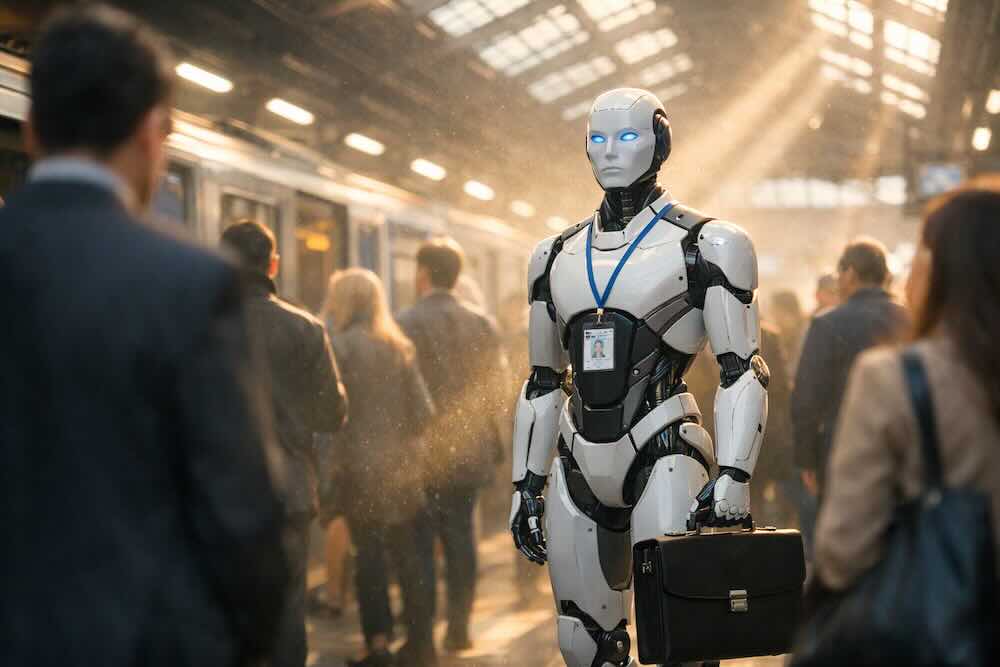
China is writing the rulebook for embodied intelligence as production ramps. The headline is scale, the plot twist is certification.
Humanoid robots are doing that familiar tech thing where we rush from “look, it moved!” to “we should mass-produce ten thousand of them” in the time it takes a regulator to find the right PDF.
China is now trying to compress the awkward middle phase by publishing a national standard system for humanoid robots and embodied intelligence. Translation: before these machines wander into public spaces and household-adjacent chaos, somebody wants test methods, definitions, and a shared vocabulary for what “safe” even means.
Scale is easy to brag about, hard to certify
A China Daily report this week described an automated production line for humanoids in Foshan, Guangdong, with an annual capacity of 10,000 units and a claimed throughput of one robot every 30 minutes, with quality traceability and modular production. That is the kind of sentence that makes investors clap and safety engineers reach for the migraine medication.
Because “we can build it” is not the same thing as “we can safely deploy it.” Industrial robots already injure people even inside fenced-off cells with procedures and trained staff. Humanoids, by design, want to leave the cage.
China’s new standard system is a preemptive reality check
Robotics & Automation News summarizes China’s Ministry of Industry and Information Technology (MIIT) publishing a “Humanoid Robot and Embodied Intelligence Standard System (2026 Edition)” organized into six pillars, including system integration plus safety and ethics. The framing is blunt: if humanoids are going to move from factories to commercial spaces and homes, safety becomes the gating factor, not a footnote.
The same piece describes a three-layer safety approach: physical safety (hardware, emergency stops, force limiting), behavioral safety (predictable failure responses and “minimum risk condition”), and operational or ethical constraints on when autonomy is allowed versus when a human must be in the loop.
The Droid Brief Take
Humanoid robotics has been cosplaying as a software problem, but safety makes it an engineering discipline again. Standards are what happens when the hype wants to leave the lab and meet insurance, liability, and the public’s unromantic desire not to be crushed by a 60 kg beta test.
Also, notice what keeps sneaking into the serious conversation: tactile sensing and force control. You can’t certify what you can’t reliably perceive, and “it looked fine in the demo” is not a test method.
What to Watch
1) Does this become enforceable? A standards framework is step one. The real question is whether compliance becomes required for deployment claims, procurement, or insurance.
2) Minimum-risk behavior in practice. It is easy to say “safe state,” harder to define it for legged systems in dynamic environments. What does “freeze” mean on a staircase?
3) Tactile sensing as the bottleneck that keeps winning. If standards start naming tactile sensors and force limits, that is the industry admitting the real blocker is not vocabulary, it is contact-rich competence.
Sources
China Daily — “Automated humanoids production line in place”
Robotics & Automation News — “From factory tools to public risk: Why humanoid robot standards matter now”