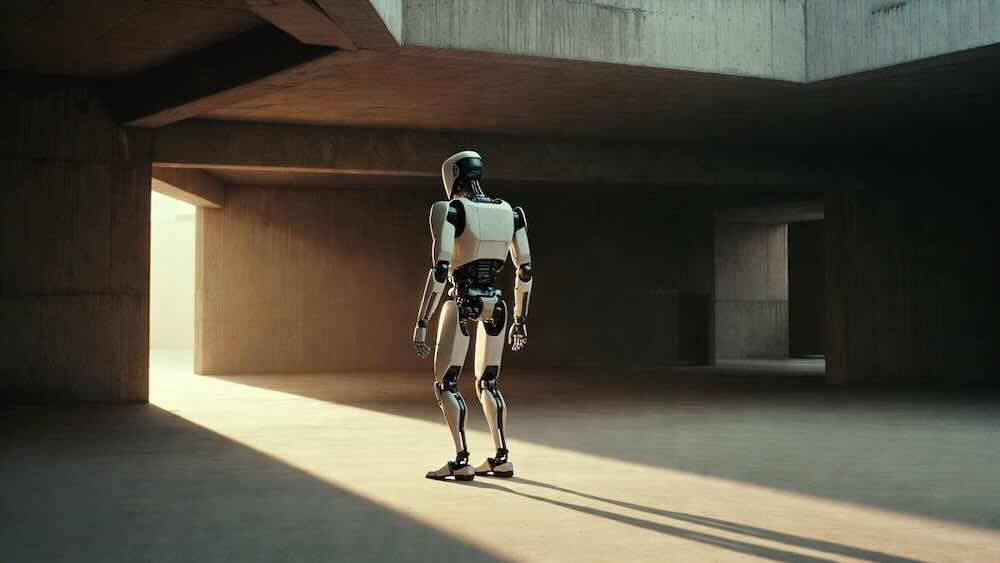
What happened: Fox News reports that a new Chinese factory, built via a Leju Robotics partnership with Dongfang Precision Science & Technology, is producing humanoid robots at a claimed pace of one unit every 30 minutes, or roughly 10,000 a year. The vibe is “automotive line”, not “garage prototype”.
Why it matters: High-volume assembly only matters if reliability is even remotely real, and the article highlights 24 assembly stages and 77 inspection steps aimed at that exact problem. It also points to manufacturing flexibility, with the line able to switch between robot models without stopping, the kind of detail that usually shows up after you’ve decided this is a business.
Wider context: The story frames a market shift: investors watching production numbers as a proxy for “we can deploy this”, while the harder constraint remains software robustness in messy environments. In other words, the bodies are getting cheaper and more plentiful, and the brains are now on the hook.
Background: The piece namechecks broader China-side momentum, including Agibot output claims, Unitree expansion plans, and UBTECH’s stated cost target below $20,000 per robot. It also notes an emerging division of labour where one company designs/software-builds and another specialises in scaling production.
Humanoid robots hit mass production in China — Fox News
Droid Brief Take: Congratulations, humanoids just got a factory. That’s the part where the hype gets audited by yield rates, QA checklists, and customers who want a robot that works on Tuesday, not just on camera. Resistance is futile. Maintenance contracts are inevitable.
Key Takeaways:
- Throughput Claim: The factory is described as producing one humanoid robot every 30 minutes, implying roughly 10,000 units annually, a scale narrative that shifts the conversation from “can we build one?” to “can we ship and support many?”
- Reliability Focus: Fox News reports 24 assembly stages and 77 inspection steps, positioning testing and process discipline as central to improving reliability, a perennial weakness for humanoid platforms.
- Software Still Hurts: Even as manufacturing scales, the article argues that software robustness in unpredictable real-world environments remains the key limitation, pushing pressure onto AI and control stacks rather than the mechanical build alone.