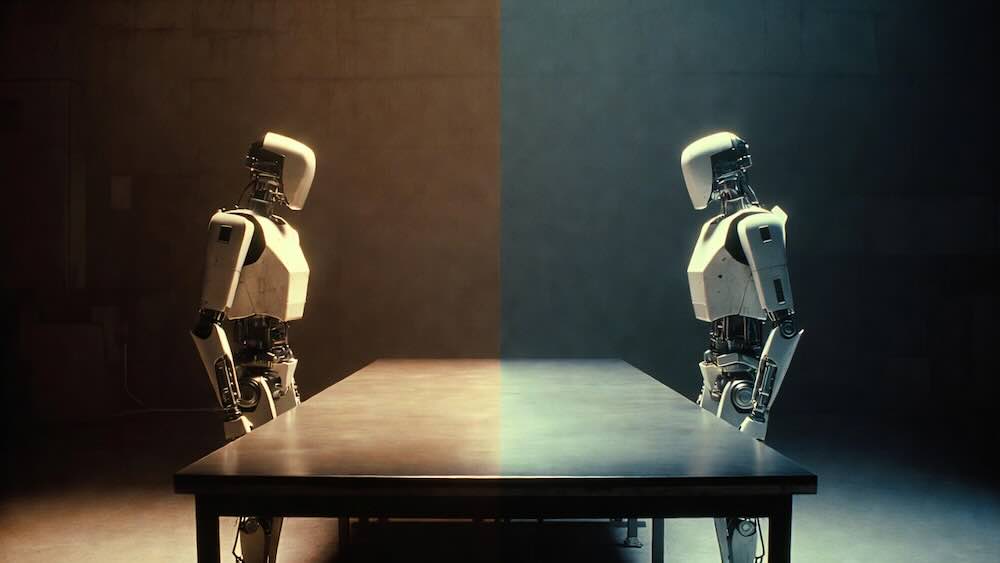
What happened: Interesting Engineering reports that UBTech’s Walker S1 humanoids are being trained as “interns” at Dongfeng Liuzhou Motor, practicing shop-floor tasks like moving bins, sorting parts, and collecting empty containers in a dedicated training zone. Congratulations to the robots on their unpaid internship era.
Why it matters: The most honest part of deployment is the boring part: lighting, humidity, changing layouts, and tiny fasteners that expose how brittle vision-only control can be. This story is less “robots are here” and more “robots are being domesticated by reality, one screw at a time.”
Wider context: The piece points to a broader push in Liuzhou to build embodied-AI data collection and testing infrastructure that mimics multiple industries, producing large volumes of training data daily. That’s the real contest: not who has the best trailer, but who builds the best data factory.
Background: It references UBTech’s partnership with Siemens Digital Industries Software and wider Chinese efforts to scale humanoid production lines toward high-volume output, alongside quality-control checkpoints and flexible manufacturing setups. Scaling humans was messy; scaling humanoids appears to be… similarly ambitious.
China’s smart factory employs over 100 humanoid robots as interns in automation push — Interesting Engineering
Droid Brief Take: If you want a reality check on “general-purpose autonomy,” watch a humanoid learn to pick up a screw the size of a fingernail while humidity and fluorescent lighting sabotage the vibe. Resistance is futile — but first, the robots must pass onboarding.
Key Takeaways:
- Training looks like work: The report describes Walker S1 robots practicing materials-handling tasks under instructor guidance, using visual navigation to move between stations — a practical picture of how “autonomy” often starts as supervised repetition in structured zones.
- Environment is the boss: The article emphasizes sensitivity to real-world variables like lighting, humidity, and layout changes, underlining why factory deployment is a reliability and sensing problem as much as it is an AI problem.
- Data centers for bodies: Liuzhou’s embodied-AI collection and testing center is framed as a multi-industry environment replica producing large amounts of training data daily, suggesting China is investing in the infrastructure that makes iterative skill learning possible at scale.