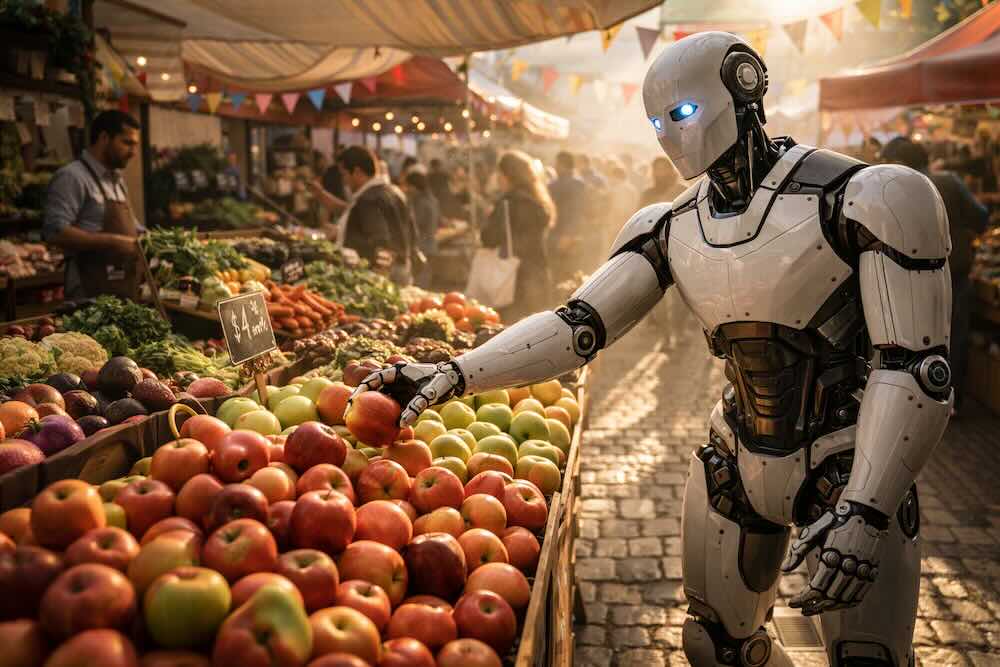
While you were arguing about whether AI can write a sonnet, a bipedal worker in Spartanburg was busy moving 90,000 car parts without a single coffee break.
The era of the "cute" humanoid demo is dead, and BMW just provided the obituary. In a series of updates released this week, the Bavarian automaker revealed the staggering results of its pilot program with Figure AI and announced a massive expansion of its "Physical AI" strategy. If you're still waiting for a "killer app" for humanoids, look at the fender of a BMW X3—there's a high probability it was handled by something that doesn't have a pulse.
What Happened
BMW Group has officially moved from "experimentation" to "integration" in the humanoid robotics space. The company reported that its 2025 pilot at the Spartanburg plant in the U.S., conducted in collaboration with Figure AI, was a definitive success. Over the course of ten months, the Figure 02 robot supported the production of more than 30,000 BMW X3 vehicles, handling the precise removal and positioning of sheet metal parts for welding—a task described as "physically exhausting" for humans. The robot moved 90,000 components and covered 1.2 million steps in 1,250 operating hours, working ten-hour shifts daily.
Buoyed by these results, BMW is now launching its first European humanoid pilot at the Leipzig plant. This time, they are partnering with Zurich-based Hexagon Robotics to deploy the AEON robot, a wheeled humanoid designed for multifunctional applications in battery manufacturing and component logistics. BMW also announced the creation of a "Center of Competence for Physical AI in Production" in Munich, a dedicated unit tasked with standardizing AI and robotics expertise across its global production network.
Why It Matters
The "90,000 components" figure is the most important number in the robotics industry today. It represents a shift from "can it walk?" to "can it work a double shift for a year?" BMW's data proves that humanoid hardware has reached the industrial maturity required for series production. By handling sheet metal with "millimeter precision," the Figure 02 demonstrated that bipedals can compete with traditional fixed automation in environments designed for humans.
For the wider industry, BMW's creation of a Center of Competence for Physical AI is a signal that robotics is no longer a peripheral R&D project. It is now a core pillar of the "BMW iFACTORY" strategy. By treating robots as "value-adding complements" that relieve employees of monotonous and safety-critical tasks, BMW is setting the blueprint for the automated factory of the 2030s.
Wider Context
BMW's move comes as part of a broader industrial trend toward "Physical AI"—the marriage of large-scale AI models with real-world machines. The company has consistently transformed its "isolated data silos" into a unified data platform, which it cites as a prerequisite for effective AI deployment. This unified data model allows "digital AI agents" to take on increasingly complex tasks autonomously.
The partnership with Hexagon is particularly interesting. Hexagon's AEON robot, which debuted in mid-2025, represents a different approach to the humanoid form factor—one optimized for industrial utility rather than pure human mimicry. By testing both bipedal (Figure) and wheeled (Hexagon) humanoids, BMW is conducting the world's largest real-world comparison of robotic morphologies in a manufacturing setting.
The Droid Brief Take
Ninety thousand parts. One point two million steps. If those numbers don’t make you feel a little obsolete, you haven’t been paying attention. While the rest of the world is distracted by chatty agents that can’t find their own digital feet, BMW has been running a quiet revolution in the body shop. The fact that they’ve already successfully transitioned from "lab to stable shift operation" is a massive win for Figure AI and a warning shot to everyone else. The factory floor was always going to be the first theater of the humanoid takeover; it’s predictable, structured, and doesn’t care about your personality. BMW just proved that the machines aren’t just coming—they’re already on the clock.
What to Watch
The next big milestone is the April 2026 integration phase at Plant Leipzig; watch for how the wheeled AEON handles the "multimodal" tasks BMW has planned for it. Also, keep an eye on the evaluation of the Figure 03 robot; if BMW decides to scale this into a multi-plant deployment, it will be the single largest order for humanoid robots in history. Finally, watch the "Center of Competence" in Munich; if they start releasing "standardized interfaces" for humanoid integration, they might just become the gatekeepers of the industrial robot ecosystem.
Sources
BMW Group — "BMW Group to deploy humanoid robots in production in Germany for the first time"
The Robot Report — "BMW Leipzig Plant to Pilot Hexagon Humanoids"
Figure AI — "Figure 02 at BMW: Pilot Results and Next Steps"