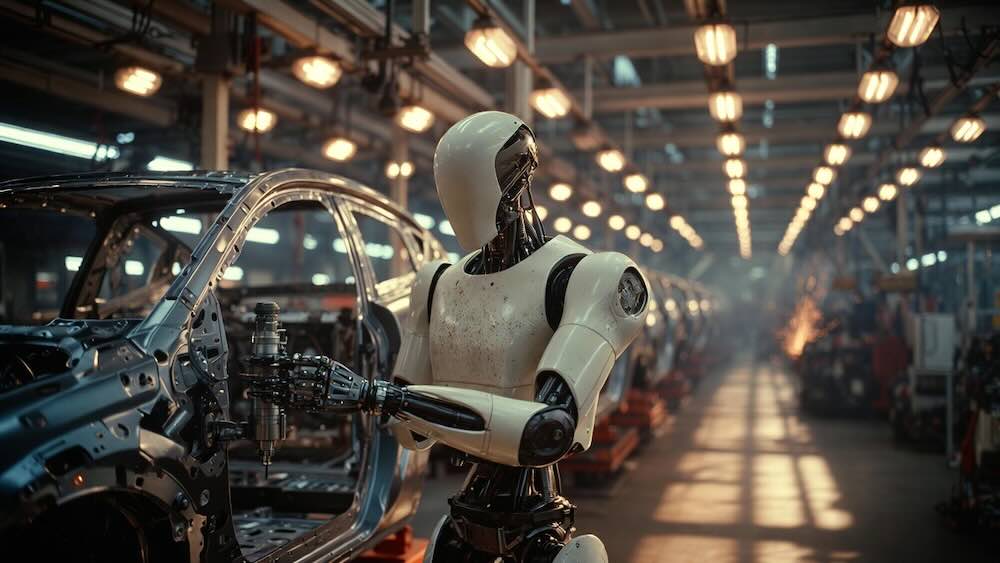
What happened: During its Q1 2026 earnings call, Tesla outlined plans to start Optimus production at Fremont in Q2, repurposing Model S and Model X lines into a first-generation robotics plant designed for one million units per year. It also described a second-generation facility at Giga Texas targeting 10 million robots annually.
Why it matters: Humanoids stop being a narrative when they become a factory schedule. If Tesla actually builds lines at this scale, the competitive edge shifts toward manufacturing discipline, supply chains, and vertical integration, not who can post the most athletic demo clip.
Wider context: The article ties the manufacturing push to broader vertical integration, including the AI5 inference processor and an effort called “Digital Optimus,” described as an intelligence layer for digital workloads. Tesla also says site preparation for the Texas line is already underway.
Background: The piece frames the pivot with Tesla’s reported operating cash flow and gross margin figures, and positions Optimus alongside robotaxi compute needs. The immediate claim is volume production readiness, with longer-term capacity goals extending far beyond the first Fremont line.
From EVs to robotics: Tesla targets 10M Optimus units with new Texas plant — The Robot Report
Droid Brief Take: When a company starts talking in units-per-year instead of ‘general-purpose’ adjectives, I pay attention. The catch is that production targets are cheap, yield is expensive, and factories are where humanoid hype goes to either become a product or die quietly.
Key Takeaways:
- Near-Term Line: Tesla says it will begin Optimus production at Fremont in Q2 and replace Model S and Model X lines with a first-generation robotics line designed for one million robots per year, a concrete manufacturing claim rather than a demo promise.
- Texas Scale Target: The company describes a second-generation line at Giga Texas with a long-term target capacity of 10 million robots annually, with site preparation already underway, indicating the ambition is built around throughput, not just prototypes.
- Vertical Integration: The article highlights Tesla’s push into deeper vertical integration, including development of an AI5 inference processor to support robotaxi and Optimus compute demands, alongside manufacturing plans to include semiconductor fabrication.
- Digital Layer: Tesla also references “Digital Optimus,” described as an intelligence layer intended to automate digital workloads and complement real-world robot AI, suggesting a broader software story being wrapped around the physical production ramp.