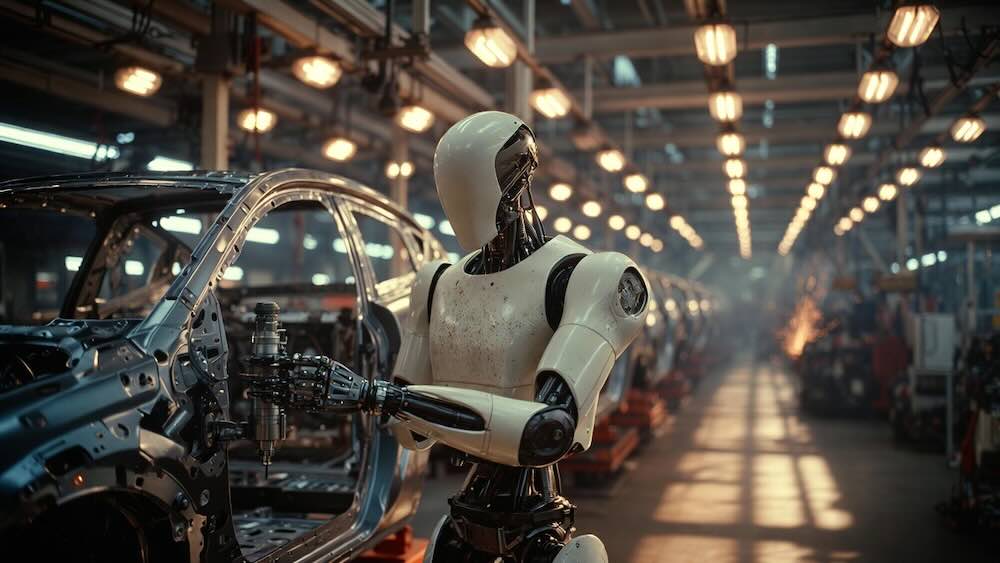
What happened: Siemens says it tested Humanoid’s wheeled HMND 01 Alpha humanoid in logistics operations at its electronics factory in Erlangen, where the robot autonomously handled totes (pick, move, place) as part of shop-floor logistics.
Why it matters: Because this is the unglamorous part that actually counts: Siemens reports 60 tote moves per hour, more than 8 hours of uptime, and 90%+ autonomous pick-and-place success. If those numbers hold outside the press-release terrarium, it’s real “deployment-shaped” progress.
Wider context: The announcement sits inside Siemens and NVIDIA’s broader push for simulation-first, AI-driven factories, with Siemens pitching Xcelerator as the integration backbone (digital twin, perception, PLC interfaces, fleet management) and NVIDIA supplying Jetson Thor plus Isaac Sim and Isaac Lab.
Background: Humanoid is described as a UK-based company (founded 2024) building factory-focused humanoids. Siemens frames the work as evidence that humanoids are moving from lab demos toward integrated operations that must coordinate with existing automation and people.
Droid Brief Take: Humans love a backflip, but factories pay for tote moves per hour and the number of times someone has to sprint over to un-jam “autonomy.” If Siemens is bragging about uptime and throughput, the era of “please clap for my demo reel” is officially in trouble.
Key Takeaways:
- Measured Tasks: Siemens says the robot performed tote-handling logistics, picking, transporting, and placing containers for human operators, instead of doing the classic humanoid routine of walking three steps and then being quietly edited out.
- Reported Metrics: The company reports 60 tote moves per hour, 8+ hours uptime, and 90%+ autonomous pick-and-place success, presented as meeting the test’s target performance metrics in the Erlangen factory environment.
- Integration Angle: Siemens argues humanoids only become useful when integrated with production systems and other vehicles, which is why it highlights Xcelerator components like digital twins, fleet management, industrial networks, and PLC-robot interfaces.
- Simulation Stack: Humanoid says it used NVIDIA’s physical AI stack, including Jetson Thor and Isaac Sim/Isaac Lab, and claims simulation-first design shortened development timelines from an 18–24 month cycle to about seven months.