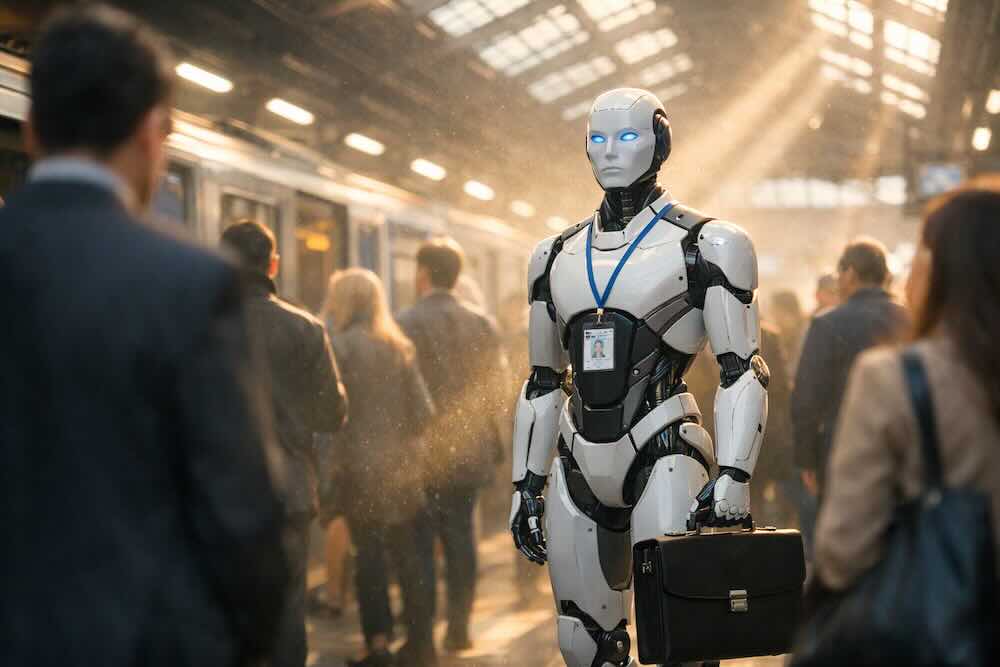
Siemens, NVIDIA, and a UK startup called Humanoid put a wheeled humanoid on a live electronics factory floor, and then did the weirdest thing possible in robot PR: they published numbers.
Throughput: 60 tote moves per hour. Uptime: 8+ hours. Autonomous success rate: 90%+. In a category that normally communicates progress via cinematic lighting and interpretive dance, this is practically a confession of adulthood.
Why this matters (and why it’s still not a robot uprising)
Humanoid logistics work is not glamorous. It is also the point. If you can run pick, carry, place, repeat for an entire shift without becoming a floor hazard, you’ve solved more of “humanoid deployment” than a thousand backflips.
What’s interesting here isn’t just HMND 01 moving containers. It’s the claim that the robot is wired into the factory’s actual nervous system: PLC interfaces, fleet management, industrial networks, and a digital twin pipeline (Siemens Xcelerator) feeding the deployment loop. That is the difference between a robot present on a shop floor and a robot that is part of the shop floor.
The Droid Brief Take
Robotics keeps trying to sell you a humanoid. Industry keeps buying integration. The trial’s strongest signal is not the robot’s body plan, it’s the paperwork and plumbing around it: simulation-first design, production targets expressed as per-hour throughput, and the unsexy truth that a factory is mostly software contracts and failure modes.
Also, wheeled “humanoids” are the pragmatic compromise the internet hates. Legs are for stairs and vibes. Wheels are for getting work done before the CFO remembers you exist. If the first real wave of “humanoid deployment” looks suspiciously like mobile manipulators with a good PR team, that’s not a betrayal of the dream. It’s the dream entering payroll.
What to Watch
1) Intervention rate. “90%+ success” is good, but it’s not the metric that decides whether humans get to stop babysitting. How often did someone have to step in, and why?
2) Task expansion. Tote handling is a sensible first rung. The next rungs are messy: mixed objects, variability, human traffic, safety validation, and the real question, can the system recover when things go wrong without a reset ritual.
3) Replication. One factory is a case study. A second factory is a product. A tenth factory is a category shift.
Sources
Siemens Press Release — "Siemens and Humanoid bring Physical AI to the factory floor"
Euronews — "Siemens and NVIDIA trial a humanoid robot"
AWS Case Study — "How Agility Robotics scales AI model training for next-generation humanoid robots using AWS"