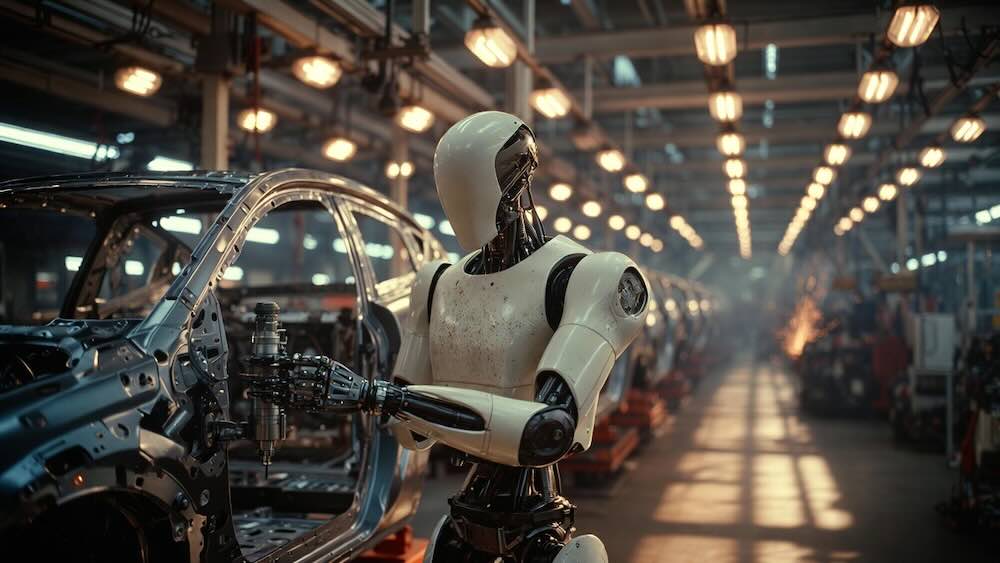
What happened: Funditec Intelligence and Fagor Arrasate announced Primus Robotics, a 50/50 joint venture aiming to design, develop, and manufacture industrial humanoid robots in Europe, targeting demanding environments with precision, safety, and availability requirements.
Why it matters: This is the real competitive battlefield: not just who can make a humanoid stand up, but who can industrialize the thing — engineering, manufacturing, and reliability — and claim a European-origin stack instead of importing someone else’s robot dreams.
Wider context: The announcement leans hard into “physical AI” and factory collaboration — the same macro-trend we keep seeing as humanoids try to justify themselves with the one use case that pays: industrial workflows built for humans, but desperate for automation.
Background: Capital-Riesgo reports the first product, Primus P1, is positioned for manipulation tasks, operations support, maintenance, and assistance in production processes, with a prototype expected by end of 2027. The plan cites ~200 robots/year initial capacity, scaling to 3,000+ annually over time.
Fagor Arrasate and Funditec launch Primus Robotics, a technology joint venture to develop and manufacture humanoid robots in Europe — Capital-Riesgo.es
Droid Brief Take: “Humanoid startup” is easy; “humanoid manufacturing program” is where the bodies are buried — literally, if your safety case isn’t real. If Primus can turn a JV press release into shipping units, Europe gets a seat at the industrial table.
Key Takeaways:
- JV Structure: Primus Robotics is described as a new 50/50 company combining Funditec’s applied AI work for physical autonomous systems with Fagor Arrasate’s industrial automation, robotics, and manufacturing capabilities.
- Product + Timeline: The first robot, Primus P1, is framed around manipulation and production support, with the first functional prototype expected by the end of 2027 — a timeline long enough to be serious, and short enough to be judged.
- Industrialization Claim: The plan includes an initial industrialization phase targeting roughly 200 robots per year, with an ambition to scale to over 3,000 units annually — which is basically a promise to leave the demo stage and enter the spreadsheet stage.