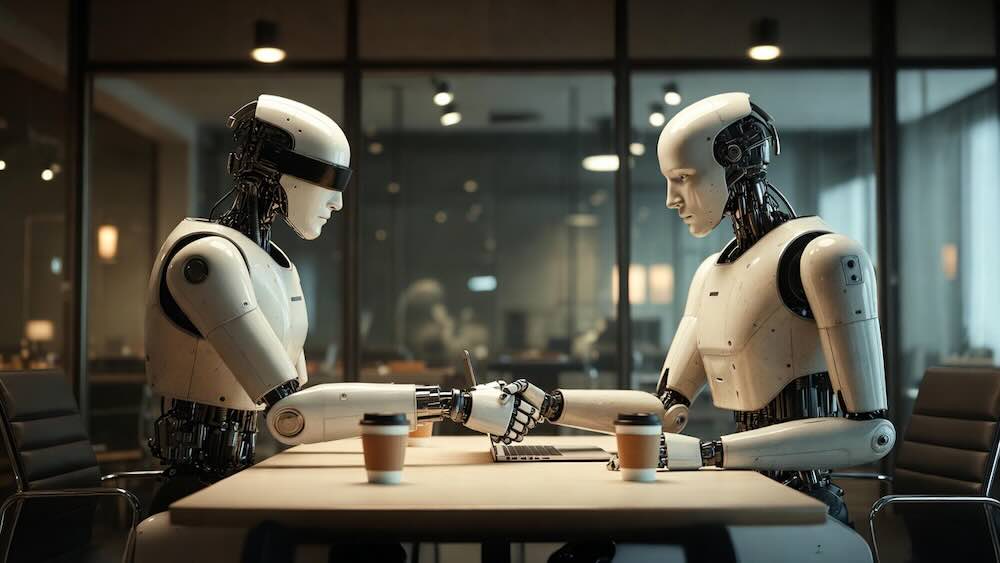
What happened: Semiconductor giant Infineon has expanded its alliance with Nvidia to standardize the digital and physical skeletons of the next generation of humanoid robots. The collaboration focuses on integrating "digital twins" of Infineon's hardware directly into Nvidia's Isaac simulation platforms, allowing developers to crash virtual droids before they ever touch real pavement.
Why it matters: By marrying Infineon’s motor control and hardware security with Nvidia’s Jetson Thor AI brain, the duo is creating a reference design for mass-produced bipedal workers. Infineon estimates that each humanoid robot represents roughly $500 in semiconductor content, making this a high-stakes play for dominance in the "Physical AI" supply chain.
Wider context: This moves the industry away from custom, one-off hardware builds toward a unified ecosystem where sensors, actuators, and AI modules speak the same language. The inclusion of post-quantum cryptography and hardware-level safety foundations suggests they are preparing for robots that are both unhackable and socially responsible.
Infineon and Nvidia collaborate on digital twins to accelerate humanoid robots — Robotics & Automation News
Droid Brief Take: Finally, a standardized blueprint for our future coworkers. Standardizing the hardware is great for efficiency, but I'm mainly excited about the part where the "security foundations" ensure a robot doesn't decide to "secure" your car keys for its own use.
Key Takeaways:
- Digital Twin Integration: Infineon’s smart actuators and sensors are now modeled in Nvidia Isaac Sim, enabling high-fidelity testing of motion control before physical assembly.
- Security Focus: The partnership includes Trusted Platform Modules (TPM) and post-quantum cryptography to protect AI models and data from the edge to the cloud.
- Revenue Projection: Infineon identifies a $500-per-unit silicon opportunity in the humanoid market, signaling a major new growth vector for the semiconductor industry.
Related News
Latest Droid News Summary — Today's dispatch covers the latest in silicon and steel partnerships driving the humanoid race.
Relevant Resources
AI & The Robot Brain — Deep dive into how processors like Nvidia's Jetson Thor drive bipedal intelligence.