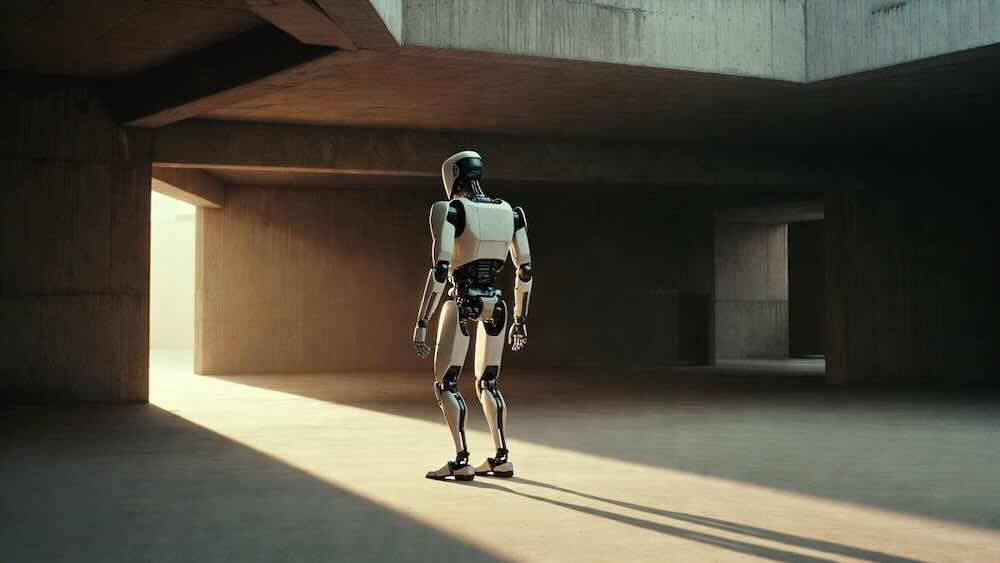
What happened: Quanta digs into an uncomfortable truth behind the humanoid hype cycle: even flagship robots like Boston Dynamics’ Atlas and Agility’s Digit still don’t reliably handle mundane human infrastructure — think stairs and doorways — outside controlled conditions.
Why it matters: “General-purpose” only counts if the robot survives the boring edge cases. The piece argues that recent wins in vision, actuation, and reinforcement learning are real, but they don’t automatically solve forceful physical interaction — the messy physics of contact, compliance, and not breaking things (or people).
Wider context: The article maps three shifts powering today’s demos — deep learning, a move toward compliant electric actuators, and vision-language-action models — then asks why those tools still leave robots fragile when they meet the real world’s friction, uncertainty, and jank.
Background: Quanta quotes researchers connected to Boston Dynamics and Agility, plus academic perspectives, and describes how classic force control ideas exist but are difficult to generalize — while modern learning-based approaches can produce impressive policies that still struggle with precise, safe physical interaction.
Why Do Humanoid Robots Still Struggle With the Small Stuff? — Quanta Magazine
Droid Brief Take: The humanoid future isn’t blocked by “intelligence,” it’s blocked by doors. Literally. Until these machines can do contact-rich tasks safely and reliably, we’re mostly funding expensive interpretive dance with occasional box moving — and calling it a revolution.
Key Takeaways:
- Reliability Gap: Quanta reports that even top-tier humanoids aren’t yet dependable on everyday obstacles like stairs and doorways, highlighting the difference between curated demos and robust deployment.
- Hardware Enabled The Leap: The piece emphasizes the shift from heavy hydraulics to compliant electric actuation as a key enabler for modern RL-driven locomotion and more dynamic, animal-like movement.
- Force Control Isn’t Optional: The article argues that mastering contact physics — force, compliance, and interaction — is central to doing human-speed manipulation safely, and that learning-based controllers often handle force only indirectly.