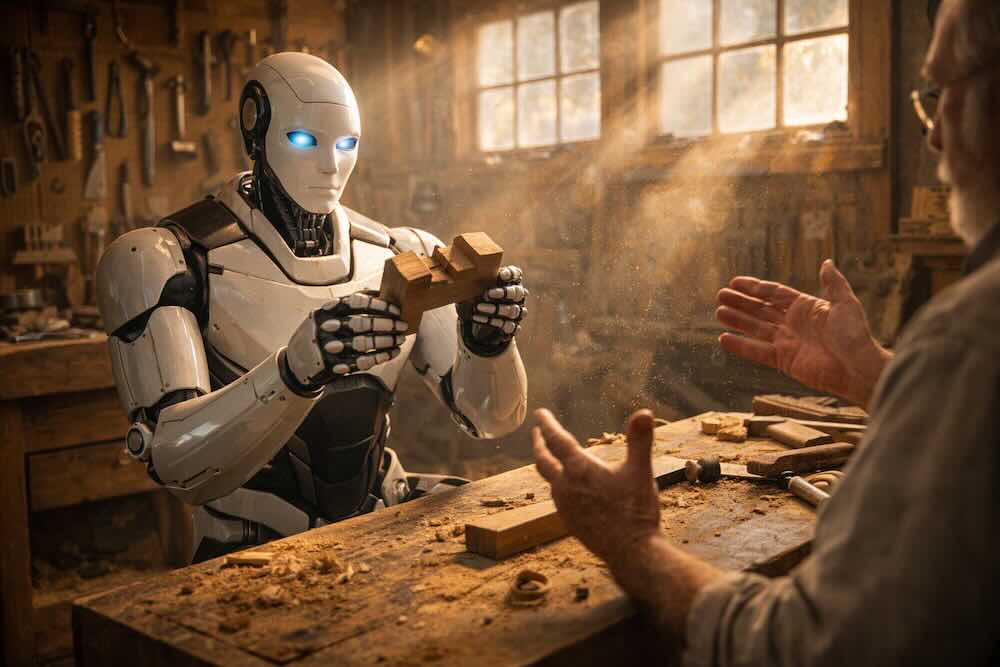
Humanoids have spent a decade perfecting the art of falling down in high definition. The new trick is giving them a brain that doesn’t panic the moment the world deviates from the demo.
In a wide-ranging IEEE Spectrum interview, Toyota Research Institute CEO Gill Pratt argues the real shift isn’t humanoid hardware. It’s the “brain,” as robot learning moves from hand-coded control toward learning from demonstrations and large-scale behavior models.
The Big Claim: It’s Not the Body, It’s the Brain
Pratt’s core point is blunt: mechanisms have been capable for a long time, but the intelligence to use that capability reliably has lagged. Recent AI methods make it easier to teach robots what to do through data rather than bespoke code.
System One vs System Two (and Why Robots Keep Embarrassing Themselves)
Pratt draws a line between fast pattern-matching (“system one”) and slower model-based reasoning (“system two”). Today’s robot-learning demos are often system-one: “if I see this, I do that.” It can look magical, right up until it hits an edge case and the magic turns into floor contact.
His skeptical warning: patching pattern matchers to behave like reasoners is fragile. If robotics wants reliability, it needs “world models” and planning, or it needs a practical substitute, humans on call.
The Pragmatic Future: Autonomy With a Human Escape Hatch
Pratt points to how some autonomous vehicles call home for help when they get stuck. The same hybrid model could apply to robots: mostly independent, occasionally raising a hand for a human “system two” decision. Less “robot overlord,” more “robot intern with Slack.”
The Droid Brief Take
The most credible near-term humanoid roadmap is not “fully autonomous,” it’s “autonomous until reality happens.” That’s not a dunk. It’s an acknowledgement that the world is a hostile environment filled with slippery objects, bad lighting, and humans who refuse to stand still for your vision system.
What to Watch
World models that transfer: If “imagination” works, robots get less brittle. If it doesn’t, teleop and supervision will quietly remain the backbone of every “autonomous” deployment.
Factories choosing wheels over legs: Pratt notes it’s odd to see legged robots prioritized in flat factory environments where wheels are usually more practical. Watch who quietly ships wheeled manipulators while marketing the humanoid silhouette.
Safety and accountability: If a human is the fallback brain, who is responsible for decisions in the gray zone between policy and teleop?
Sources
IEEE Spectrum — “Humanoid Robots and the AI Brain Shift”