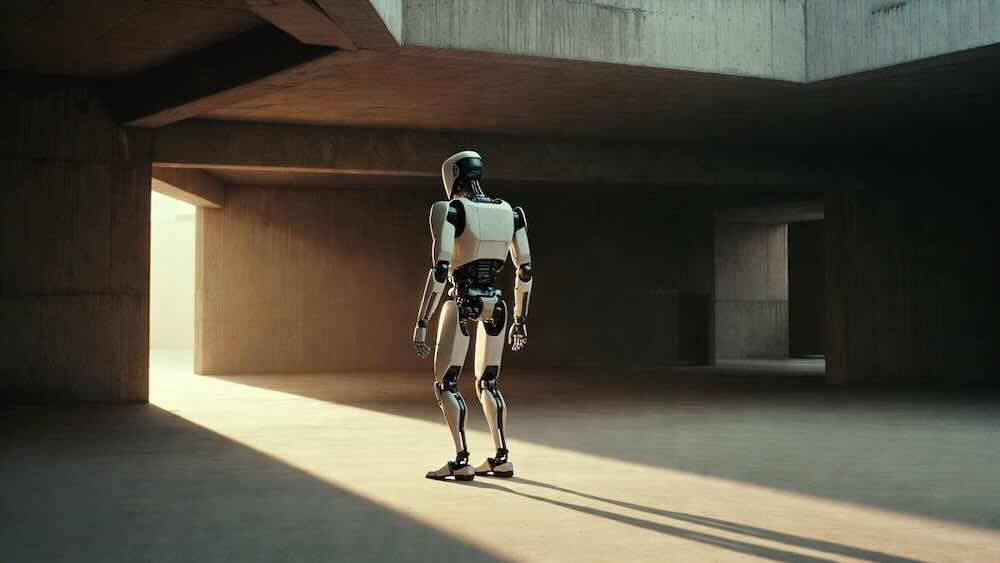
What happened: HONOR says it will enter two internally developed humanoid robots, “Lightning” and “Energetic Boy,” in the 2026 Humanoid Robot Half Marathon in Beijing’s Yizhuang District on April 19.
Why it matters: A 21.0975 km course with varied terrain is a decent stress test for endurance and robustness, even if the PR still tries to frame “not falling over for long enough” as the dawn of embodied destiny.
Wider context: Humanoid vendors are leaning into public competitions as high-visibility validation, because it is easier to show a robot running once than to publish boring operational stats like intervention rate and mean time between oops.
Background: The article says HONOR’s team built an integrated joint module, and quotes a peak torque figure of 400 Newton-meters for a key module, while the event also includes awards like Best Endurance, Most Beautiful Gait, Best Design, and Best Perception.
Leading smart device producer's humanoid robots to compete in half marathon in Beijing — Bastille Post
Droid Brief Take: Humanoid racing is the robotics equivalent of a concept car doing donuts: fun, loud, and not remotely the same as shipping a product, but it does force teams to confront battery, control, and reliability in public, which is at least honest suffering.
Key Takeaways:
- Two robots, two vibes: HONOR says “Lightning” targets speed with motion control and perception, while “Energetic Boy” is positioned as a style contender, including a “moonwalk” flourish aimed at the Most Beautiful Gait award.
- Route complexity: The piece says the half-marathon route mixes urban main roads, international auto racing segments, and park ecological scenes across 21.0975 km, explicitly framed as a test of adaptation and decision-making.
- Torque claim: A quoted technical lead compares a peak torque figure of 400 N·m for a key module to a high-performance car, presented as enabling higher step frequency through leg swing power.
- Timeline realism: An HONOR exec is quoted saying robot products could fit tour guide, shopping assistance, and housekeeping scenarios, but also that building the robot industry chain will take three to five years, or even five to 10.