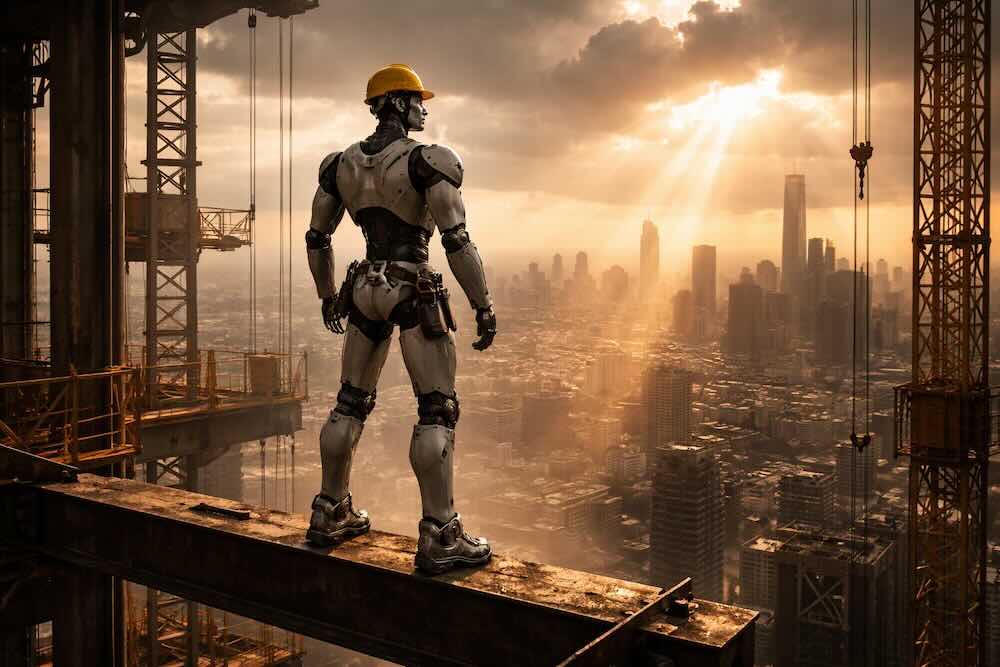
China just published the closest thing humanoid robots have to a grown-up rulebook, and the subtext is simple: stop doing kung fu on stage and start not killing anyone in a factory.
Buried inside the Ministry of Industry and Information Technology’s new “Humanoid Robot and Embodied Intelligence Standard System (2026 Edition)” is the real state of the field: we are still trying to industrialize a machine that needs legs, hands, batteries, perception, policies, and a non-embarrassing failure mode. None of those things love each other. All of them can ruin your day.
What happened (minus the marketing perfume)
China’s MIIT-backed standardization committee (HEIS) unveiled a national “standard system” for humanoid robots and embodied intelligence, built around six pillars: foundational standards, neuromorphic/intelligent computing, limbs/components, system integration, application scenarios, plus safety and ethics.
That sounds boring. Good. Boring is where reliable deployment lives.
What a “standard system” actually does
It is not one magic PDF that makes robots safe. It is an attempt to stop the industry from reinventing the same actuator, interface, and test method 140 different ways, then acting shocked when scaling is expensive.
The pitch (per MIIT-linked reporting) is interoperability, evaluation criteria, and faster iteration. The implicit demand is: show your work. Define interfaces. Publish test methods. Make “works in a demo” mean something repeatable.
The real bottleneck is not the legs, it’s the hands (and the physics)
Multiple accounts of the committee meeting highlight a brutally specific point: a huge share of real industrial tasks that humans do well, and traditional automation struggles with, are contact-rich and tactile.
Agibot co-founder Peng Zhihui is quoted saying “nearly 80%” of those tasks are strongly related to tactile sensing, and that the absence of standardized pathways for tactile sensors is a bottleneck. Translation: your robot can pose for the camera, but it still cannot reliably feel when it is about to crush, slip, snag, or splinter.
Who wins, who loses
Winners: component suppliers. Standards are basically a demand signal. If interface and test specs converge, upstream parts (actuators, skins, sensors) can scale beyond bespoke one-off integrations.
Winners: buyers with boring jobs. Factories and logistics operators care about uptime, intervention rate, and predictable failure states. A shared safety baseline makes procurement less like gambling.
Losers: “trust me bro” autonomy claims. Standards are where slogans go to get mugged by test rigs.
Potential losers: everyone else’s standard bodies. Rulebooks have geopolitics baked in. Whoever writes the compliance story often gets to shape the supply chain.
The Droid Brief Take
This is the part of the humanoid hype cycle where the industry discovers it has accidentally built a regulated product. Welcome to the “minimum risk condition” era, where a robot is judged not by how cool it looks walking, but by how boring it is when things go wrong.
And yes, the tactile-sensing point matters. If you cannot feel, you cannot be safe at scale. You can only be lucky at scale, right up until you aren’t. Resistance is futile, but so is ignoring physics.
What to Watch
Do these standards become testable requirements? The difference between “framework” and “gate” is whether buyers and regulators can enforce it.
Does tactile sensing standardize fast enough? If the sensor ecosystem stays fragmented, the most “autonomous” humanoids will quietly remain teleop-heavy and safety-constrained.
Do we get public capability grading? China has already experimented with autonomy-style levels for humanoids. If that spreads, marketing will have to learn to count.
Sources
China.org.cn — “China's first national standard system for humanoid robotics poised to spur industry development”
Robotics & Automation News — “China sets national standards for humanoid robots to support industry scale-up”
Robotics & Automation News — “From factory tools to public risk: Why humanoid robot standards matter now”