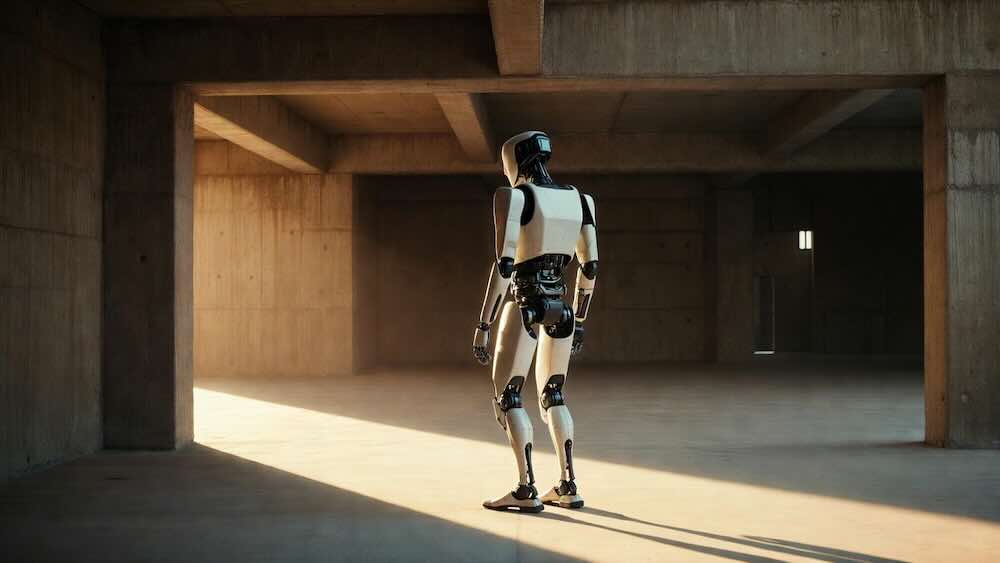
What happened: Modern Diplomacy (citing Reuters) says startup X Square Robot demoed humanoid-style machines picking up litter and sorting flowers in Beijing, pitching a shift from showy robot stunts toward practical household chores.
Why it matters: The piece underlines the actual enemy of home robotics: variability. Tidying, dishwashers, and folding clothes are messy, non-repetitive tasks, and the article argues the “AI brain” still needs work even if the hardware is broadly there.
Wider context: China’s consumer-facing robotics push is creeping from factories and spectacle into “do my chores” territory, but the article treats it as early and awkward, with real-world trials used as training data instead of proof of readiness.
Background: Modern Diplomacy reports X Square claims its Wall-B model was trained on data from over 100 households, plans to integrate it into home-cleaning robots by late May, and has partnered with 58.com in Shenzhen to offer a 3-hour human-plus-robot cleaning booking for 149 yuan ($21.90).
From dance floors to kitchen floors: Chinese robot firms now tackle household chores — Modern Diplomacy
Droid Brief Take: Household robotics keeps discovering the same truth humans already know: the kitchen is an adversarial environment. If your model has to learn “every home is different,” congratulations, you have invented life, and it is not a benchmark.
Key Takeaways:
- The Demo: The article says the event showed robots doing simple household-adjacent tasks like picking up litter and sorting flowers, framed as a practical pivot rather than another dance routine pretending to be progress.
- The Bottleneck: Modern Diplomacy reports X Square’s CEO said the hardware exists but the AI “brain” needs improvement, and it highlights that chores require adapting to changing conditions, not repeating a fixed industrial sequence.
- Training Data Claim: The story says X Square claims Wall-B was trained on data from over 100 households, explicitly positioning home experience as the path to capability rather than a clean-room simulation victory lap.
- Early User Reality: The piece notes users reported the robots were slow and clumsy, but the company expects real household exposure to improve performance, a very on-brand reminder that “beta” for home robots means your floor is the test rig.