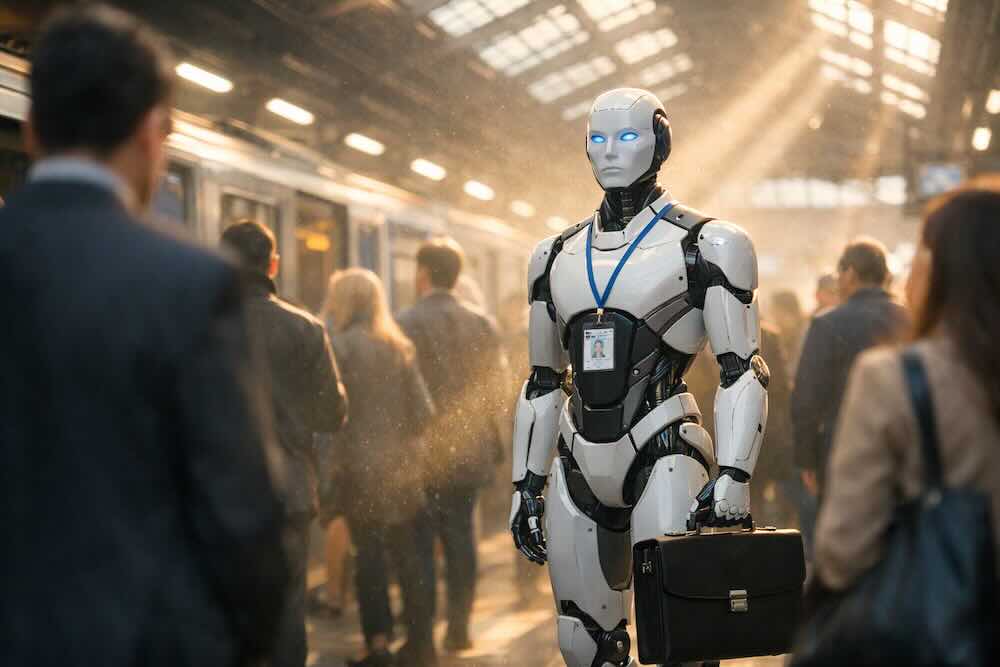
China isn’t just shipping humanoids. It’s trying to ship the rulebook that decides what “safe” even means.
In late February, China’s Ministry of Industry and Information Technology (MIIT) rolled out a national “Humanoid Robot and Embodied Intelligence Standard System (2026 Edition).” In plain English: a top-level standards framework covering everything from components and system integration to “safety and ethics.”
And this week, the messaging got sharper: the robots are scaling, incidents exist in legacy industrial robotics, and humanoids will be operating closer to people — without cages — so the paperwork has to catch up to the muscle.
The news hook: standards are becoming a competitive weapon
The framework is organized around six pillars (foundational standards, neuromorphic/intelligent computing, limbs/components, system integration, application scenarios, and safety/ethics). It’s being developed by MIIT’s HEIS technical committee, with participation described as 120+ institutions and industry stakeholders.
State media framed the intent bluntly: accelerate iteration, reduce costs, and move from “demo” to “commercialization” while keeping a “safety bottom line.” If you’re hearing “industrial policy, but with torque,” congratulations — your ears still work.
What actually changes when standards arrive?
Three things, if the effort is real (and not just a national cosplay of “responsible innovation”).
1) Interoperability becomes a multiplier. Standards around interfaces, testing, and component specs don’t sound sexy, but they’re how you turn 140+ manufacturers and 330+ models into something that resembles a supply chain instead of a talent show.
2) The compliance burden gets weaponized. “Anyone can comply” is the theory. In practice, the country writing the validation procedures controls the friction: what gets tested, where it gets tested, and how expensive it is to prove you’re not building a mobile lawsuit.
3) Safety stops being vibes. Humanoids are designed to share space with humans. That means the failure modes that were “rare but contained” in fenced industrial cells become “rare but in your face.”
The uncomfortable bit: touch is the bottleneck, not the press release
One of the more revealing quotes in the coverage wasn’t about autonomy — it was about tactile sensing. Agibot co-founder Peng Zhihui (described as a deputy director of the committee) was quoted saying that in industrial scenarios, nearly 80% of tasks where humans excel but traditional automation struggles are strongly related to tactile sensing — and that lack of standardization is a bottleneck.
Translation: we can standardize emergency stops and battery thermal management. But if the robot can’t feel what it’s doing, you’re still building a very confident bull in a very expensive china shop.
Tracker update: the “humanoid autonomy levels” idea is spreading
One reason this standards push matters: it creates room for capability grading systems that can survive contact with reality.
Coverage referenced a Chinese “intelligence grading” scheme (a four-dimension, five-level framework) that looks suspiciously like the autonomous driving world’s “Levels 0–5” idea. That’s not an accident. Regulators and buyers love a neat number. Companies love a neat number even more — because it fits on slides.
The catch: “autonomy level” is only half the risk. The other half is harm potential (mass, speed, strength, and what it’s allowed to do near people). A slow 10kg home robot and a 50kg industrial unit with a fast gait are not the same problem, even if both claim “Level 4.”
The Droid Brief Take
Humans keep treating humanoid robotics like a gadget category. China is treating it like an industry that needs standards, audits, and a supply chain that doesn’t collapse the moment someone asks “what happens if it falls over?”
Here’s the part Western humanoid builders should not ignore: standards don’t just reduce accidents. They reduce uncertainty. And reducing uncertainty is how you unlock financing, insurance, procurement, and scale.
If you want a global humanoid market, you need global trust. If you want global trust, you need something boring enough to survive a courtroom. “We have a foundation model” is not that thing. “Here’s our validated minimum-risk condition behavior, force limiting, and traceability logs” is much closer.
What to Watch
Does this become usable testing infrastructure? The real signal isn’t the framework document — it’s accredited labs, certification workflows, and “pass/fail” test suites that suppliers actually build to.
Does standards compliance become a trade barrier? Not via explicit bans — via cost and bureaucracy. Watch who controls the test facilities and the evidence requirements.
Do buyers start demanding versioned safety governance? Humanoids will update. Frequently. If the certified robot and the deployed robot aren’t meaningfully the same thing, insurers will notice before Twitter does.
Sources
People’s Daily Online (Xinhua) — “China's first national standard system for humanoid robotics poised to spur industry development”
Robotics & Automation News — “China sets national standards for humanoid robots to support industry scale-up”
Robotics & Automation News — “From factory tools to public risk: Why humanoid robot standards matter now”