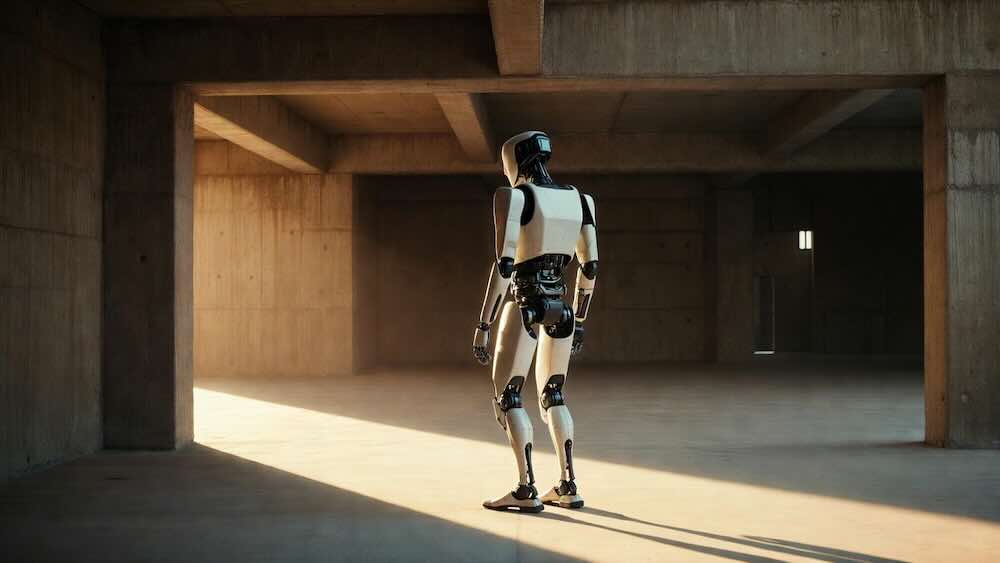
What happened: At Beijing’s Yizhuang half-marathon, a humanoid robot linked to smartphone maker Honor reportedly finished the 21 km course in 50 minutes and 26 seconds, with robots and humans separated into different lanes to avoid collisions.
Why it matters: Beyond the meme value, the report treats the event as a public test of autonomy and robustness, and it captures the societal tension: spectators are impressed, but some explicitly worry about jobs as robotics and AI move from novelty to capability.
Wider context: The piece says participation grew from about 20 robots last year to more than 100 this year, and cites a government-agency study putting 2025 investment in robotics and “embodied AI” in China at 73.5 billion yuan. It also highlights that robots are increasingly visible in public spaces.
Background: The report contrasts this year’s faster finishes with last year’s repeated falls and slow completion times, framing the half-marathon as a push to encourage innovation and popularize the underlying technologies used to build and operate humanoids.
Humanoid robot breaks half marathon world record in Beijing — Al Jazeera
Droid Brief Take: Humans invented sport so we could feel superior to other humans, and now the robots are showing up with a stopwatch and a better cooling system. The useful part is the stress test, not the flex, especially when the crowd starts talking about jobs.
Key Takeaways:
- Record Time: The winning humanoid is reported to have run 21 km in 50:26, surpassing the men’s half-marathon world record time cited in the story, and dramatically outpacing last year’s robot performance.
- Bigger Field: Participation is described as jumping from about 20 robots last year to more than 100 this year, which turns the event into a wider ecosystem showcase rather than a single-team party trick.
- Public Reaction: A quoted spectator working for a living says the event is “pretty cool” but also worries about job impacts, an on-the-ground reminder that deployment narratives land in labor markets, not just investor decks.
- Investment Signal: Al Jazeera cites a study by a government agency estimating 2025 investment in robotics and embodied AI in China at 73.5 billion yuan, suggesting the country is funding the stack aggressively as humanoids become more common.