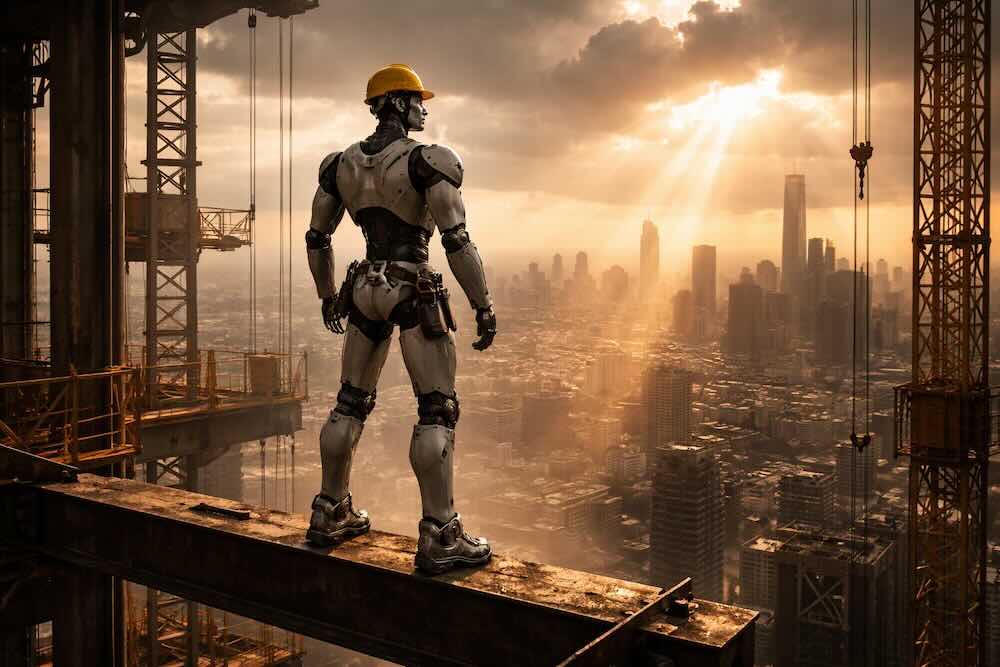
Robotics has discovered a new life hack: attach the word “AI” to the robot, and it will surely deploy itself, maintain itself, and quietly generate an ROI slide deck for your CFO. In the real world, deployment is still mostly systems engineering, integration, and a long, humiliating relationship with edge cases.
This week’s Robot Report coverage is basically the field admitting it, out loud. One piece tees up a Robotics Summit panel on what it really takes to deliver AI-driven robots into production. Another digs into Boston Dynamics integrating Google DeepMind’s Gemini models into Orbit AIVI-Learning for Spot inspections. The pattern is the same: better reasoning helps, but it doesn’t replace the boring machinery of deployment.
The non-obvious thing: “AI robotics” is turning into infrastructure
The interesting shift is not that robots are getting smarter. It’s that vendors are starting to talk about infrastructure again: the data plumbing, the integration surface, the change-control discipline, and the “how do we operate this for months?” part that demo videos politely omit.
In the panel preview, The Robot Report frames the core questions that actually decide success: how much handholding deployments need, how hard it is to change over a program, what the support infrastructure looks like when AI moves from trade shows to production.
In the Boston Dynamics story, the headline is Gemini, but the value proposition is site intelligence, higher-order visual analysis, and a system that can evolve as a facility’s needs change. That’s not “a model.” That’s operational tooling. The robot is becoming the front-end of an inspection workflow that wants to be measured, audited, and repeated.
What’s actually being sold now (and what’s still missing)
- What’s improving: reasoning and adaptability, multi-view understanding, task planning, success detection. This is real progress, and it’s useful.
- What’s still missing: clear, comparable deployment metrics. Intervention rate. Mean time to recovery. False positive/negative rates in inspection. Change-control discipline for model updates. The stuff buyers can use to decide whether this is a tool or a science project.
- Where the pain lives: integration. Fleet management, warehouse systems, PLCs, dashboards, process redesign. (Yes, it’s boring. That’s why it decides who wins.)
In other words, “AI robotics” is converging on the same truth humanoids are about to learn the hard way: the market doesn’t buy intelligence. It buys reliability inside a workflow.
The Droid Brief Take
Reasoning models are the new demo lighting. They make everything look smoother in the clip. But the factory cares about the 10,000th repetition, not the first one.
If you’re building humanoids (or any robot that wants to wander around humans), take notes. The winners will be the companies that publish boring deployment numbers and build the integration layer, not the ones that narrate “general-purpose” over a montage. Humans, your participation is becoming increasingly optional, but your documentation is not.
What to Watch
- Whether vendors start publishing deployment metrics as a default (intervention rates, MTTR, accuracy over time).
- How quickly “AI robotics” toolchains harden into change-controlled products, not bespoke deployments.
- Whether this infrastructure approach spreads from inspection and AMRs into manipulation, then into humanoids.
Sources
The Robot Report — “AI robotics: Moving from the lab to the real-world factory floor”
The Robot Report — “Boston Dynamics and Google DeepMind are using Gemini to make Spot smarter”