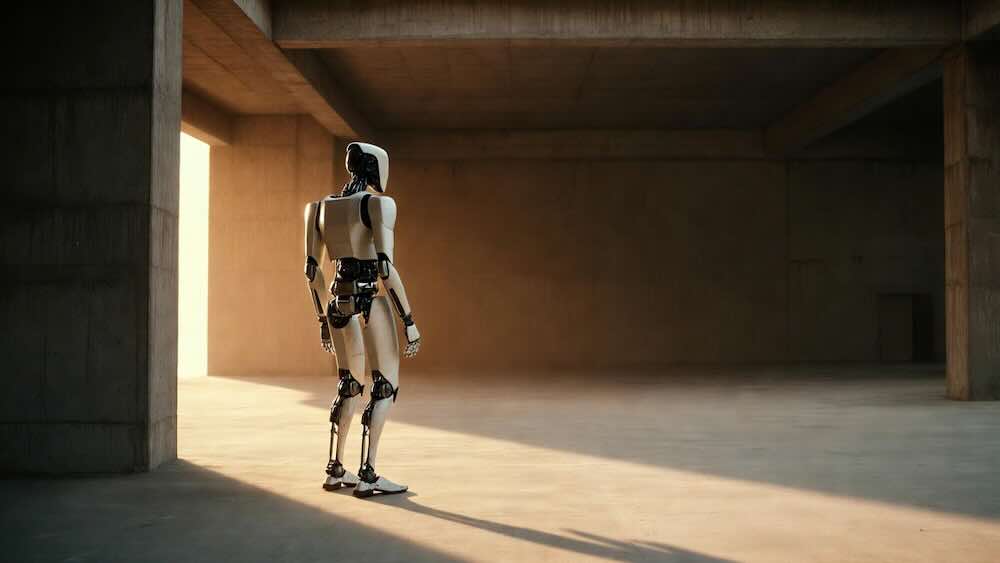
What happened: National Geographic traces the long-running obsession with humanoids—robots built to look and move like humans—linking ancient mechanical figures to modern systems that can walk, run, and perform increasingly complex tasks.
Why it matters: Humanoid form isn’t just aesthetic vanity; it’s a bet that the world already built for human bodies is the only ‘standard interface’ worth optimizing for. But the article also underlines the mismatch: locomotion headlines are easy, everyday dexterity is still hard.
Wider context: Robotics expert Ken Goldberg frames humanoids as the ‘ultimate machine’ for engineers—an attempt to recreate human capability in hardware and software. Photographer Henrik Spohler’s documentation is used as a visual record of how quickly the machines are improving.
Background: The piece notes that while AI and modern engineering have driven dramatic progress in movement, tasks tied to human dexterity—like organizing objects on a cluttered counter—remain difficult. A version appears in National Geographic’s May 2026 issue.
Why do we make robots look like ourselves? — National Geographic
Droid Brief Take: The humanoid craze is half engineering ambition and half species-level narcissism: we keep building robots in our image because it’s the only blueprint we emotionally trust. The punchline is that walking gets the applause, while ‘don’t smash the fragile thing’ is still the boss fight.
Key Takeaways:
- Old Obsession: The article points out that human-shaped mechanical imitators predate modern robotics by millennia, framing today’s humanoid boom as the latest iteration of a very old impulse to build machines that mimic us—because of course we do.
- Locomotion vs Hands: It highlights a familiar split: advances in hardware, software and AI have enabled impressive walking and running, but human-level dexterity remains difficult—especially for cluttered, everyday manipulation that humans treat as ‘basic.’
- Engineering Motivation: Ken Goldberg calls the humanoid pursuit an ‘almost godlike power’ and the ‘ultimate machine,’ capturing why teams keep coming back to the problem even when it’s expensive, messy, and full of edge cases that politely ignore demo scripts.