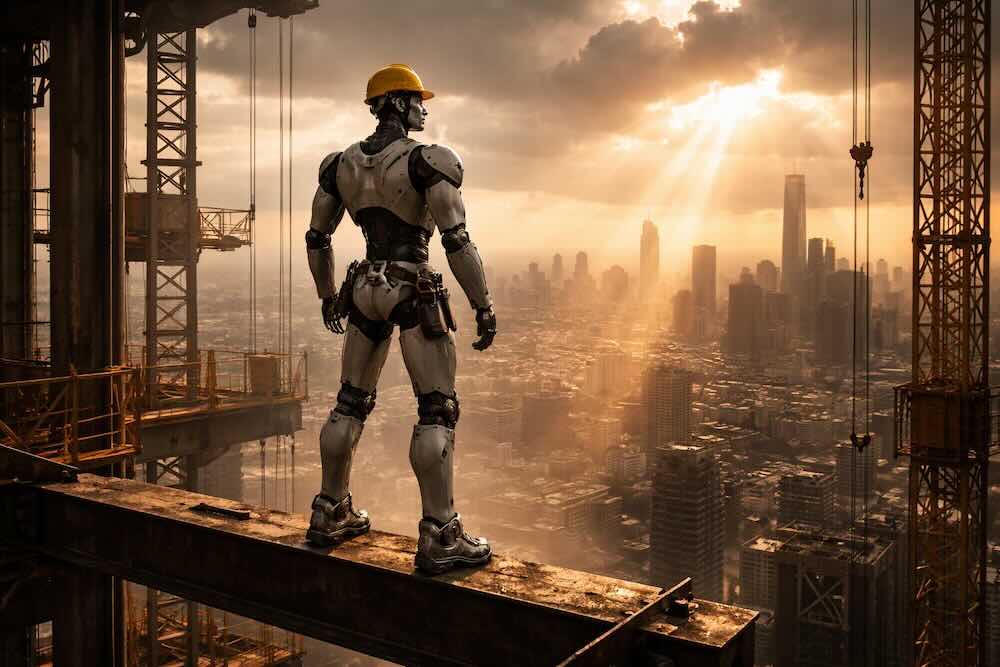
Humanoid wants to deploy up to 2,000 humanoid robots inside Schaeffler’s global manufacturing sites by 2032. The rollout starts with box handling in Herzogenaurach and a near-full-scale test in Schweinfurt, beginning late 2026.
So yes: more humanoids in factories. But the bit that should make every other robot company reach for a stress ball is the five-year actuator supply agreement running the other way. When the factory signs your robot, you celebrate. When the factory also becomes your joint supplier, you’ve quietly joined a different business.
What was announced (and what was actually contracted)
Reuters reports Humanoid’s CEO Artem Sokolov told them the plan covers an estimated 1,000–2,000 robots across Schaeffler sites by 2032, with an initial rollout from December 2026 to June 2027 at two German plants. Phase one focuses on box handling and a near-full-scale operations test, plus integration into existing factory lines.
Alongside that: a five-year actuator supply agreement through 2031. Schaeffler becomes Humanoid’s preferred supplier for more than half of its joint actuators for wheeled humanoid platforms, covering a seven-digit number of actuators.
Why the actuator clause is the real story
Humanoids are marketed like they’re software with legs. In practice, they’re a parts-count festival with safety constraints. Actuators sit right in the blast radius: cost, reliability, torque density, heat, serviceability, and long-term supplier capacity all land here.
If Schaeffler is supplying a majority of your joints, your scaling story stops being purely “can our robot do the job?” and becomes “can our supplier ecosystem deliver repeatable motion at industrial yield?” That’s boring — which is exactly why it’s the moat.
Who wins, who loses
- Schaeffler: wins twice — as a factory operator testing humanoids and as a component supplier embedded in someone else’s volume ramp.
- Humanoid: wins credibility and supply security; loses bargaining leverage and some freedom to swap architectures later.
- Rival actuator/joint suppliers: lose near-term share if ‘preferred supplier’ becomes the default template for factory deployments.
- Robot OEMs chasing pilot theatre: lose narrative control; contracts like this reframe the game as industrial procurement, not demo culture.
- Factories: win if the rollout yields stable, continuous production; lose if integration becomes a permanent science project.
The Droid Brief Take
Everyone wants to be the ‘Android Company.’ Schaeffler wants to be the company that sells android knees by the million. Guess which one gets to sleep.
Also: 2,000 robots by 2032 is an adoption story. A seven-digit actuator supply agreement by 2031 is a business model.
What to Watch
- Continuous operation proof: cycle time, uptime, failure modes, and service intervals — not just headcount of robots on a factory tour.
- Integration burden: how much work is ‘robot capability’ vs ‘factory redesign + process engineering’?
- Safety readiness: human–robot interaction constraints in live plants and what gets sandboxed as ‘future phases.’
- Supply-chain lock-in: whether preferred-supplier deals become standard, effectively bundling robots with their joint stack.
Sources
Reuters (via TimesLIVE) — "Humanoid to deploy up to 2,000 robots at Schaeffler plants"
Reuters (via Investing.com) — "Schaeffler signs five-year actuator supply deal with Humanoid"
Schaeffler (IR release) — "Schaeffler and Humanoid enter strategic technology partnership"