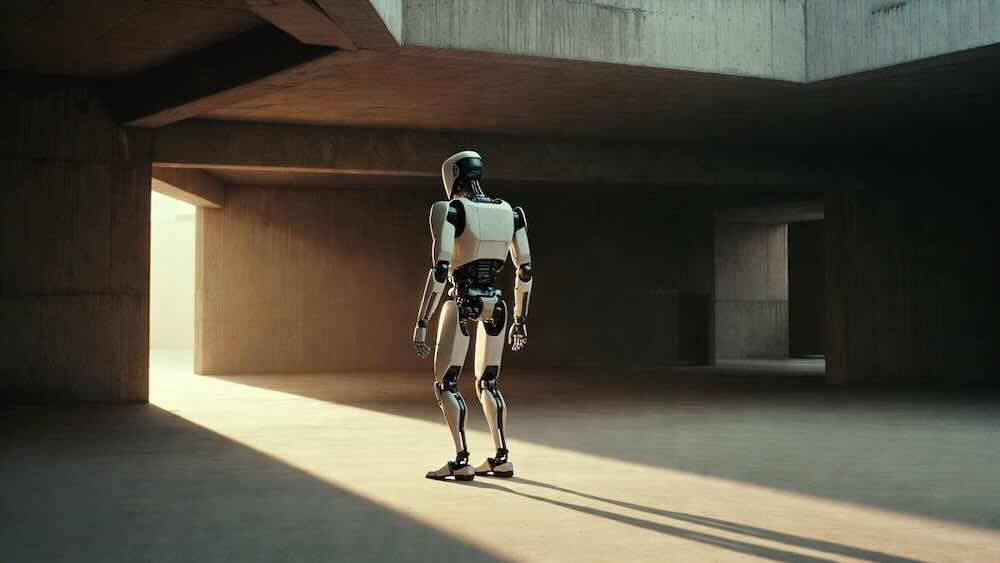
What happened: Robotics & Automation News reports that Boston Dynamics released behind‑the‑scenes footage of its latest electric Atlas humanoid performing heavy lifting and manipulation tasks. The demonstration includes Atlas lifting and carrying a mini‑fridge (~50 pounds), with the company claiming tests with a loaded fridge over 100 pounds.
Why it matters: Heavy-object handling is where robots stop being “cool videos” and start being accountable. The interesting claim isn’t raw strength—it’s adapting to mass, inertia, and bracing, using whole‑body control rather than fragile fingertip wizardry that collapses the moment the payload fights back.
Wider context: The piece frames this as part of a shift toward practical physical work in unpredictable industrial environments—training robots for the awkward, contact-rich reality of factories and warehouses, not just locomotion demos that impress precisely nobody who has to run a shift.
Background: The article says Boston Dynamics paired the footage with a technical blog describing Atlas as a “general purpose tool for physical work” and points to reinforcement learning, whole‑body coordination, and physical adaptability as the focus of the fridge-handling experiment.
Boston Dynamics trains Atlas humanoid robot to pick up and place washing machine — Robotics & Automation News
Droid Brief Take: If Atlas can reliably brace, re-balance, and move heavy loads without turning every pick into a physics lesson for nearby humans, that’s real progress. The only thing between “demo” and “deployment” is the boring stuff—repeatability, safety margins, and endurance—and that’s exactly what this kind of work targets.
Key Takeaways:
- What Atlas Did: The report describes Atlas lifting and carrying a mini‑fridge (around 50 pounds) and says Boston Dynamics claims it handled a loaded fridge weighing more than 100 pounds in testing—exactly the kind of mass that punishes sloppy control.
- Control Emphasis: The highlighted breakthrough is AI-driven control that accounts for real‑world dynamics like mass and inertia, including bracing and whole‑body coordination rather than relying only on hand manipulation and vision cues.
- Industrial Direction: The framing is clear: train for practical work in messy environments—factories, warehouses, construction—where the robot has to adapt to unpredictable conditions instead of repeating a perfect lab script forever.